

In the quest for a more sustainable lifestyle, the kitchen emerges as a pivotal area for implementing water-saving features. With kitchens accounting for a significant portion of household water use, integrating eco-friendly designs and practices not only conserves this precious resource but also reduces utility bills. This article delves into various water-saving kitchen features, offering insights into how homeowners and designers can create more efficient and environmentally conscious kitchen spaces.
Key Takeaways:
- Innovative Appliances: Utilize energy-efficient dishwashers and advanced faucets for reduced water usage.
- Eco-Friendly Materials: Choose sustainable materials and water-resistant surfaces for longevity and efficiency.
- Smart Layouts: Design kitchens with strategic placement of sinks and appliances for optimal water use.
- Water Management: Implement greywater systems and recycling methods for maximum efficiency.
- Behavioral Changes: Adopt mindful water usage habits and educate household members on conservation.
The Importance of Water Conservation in Kitchen Design
Water conservation in the kitchen is not just about reducing utility bills; it’s a crucial step towards sustainable living. According to the US EPA, each American uses an average of 82 gallons of water a day at home, with a significant portion used in the kitchen. By integrating water-saving features into kitchen design, we can significantly reduce this number, contributing to the global effort to conserve water.

Emerging Trends in Water-Saving Kitchen Features
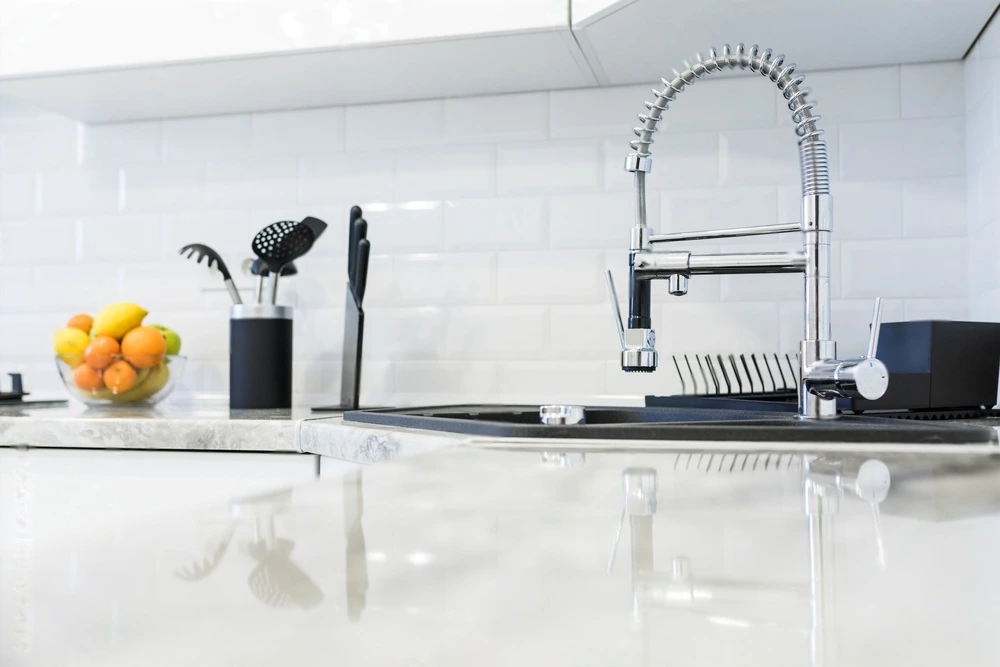
The latest trends in kitchen design are not only about aesthetics but also about functionality and sustainability. Energy-efficient dishwashers, for instance, have become a staple in modern kitchens. These appliances are designed to use less water and energy while still providing excellent cleaning performance. Similarly, advanced kitchen faucets with features like touchless operation and flow control contribute to significant water savings.
Innovative Water-Saving Kitchen Appliances
- Energy-Efficient Dishwashers: Modern dishwashers are a testament to technological advancement in water conservation. They use significantly less water compared to washing dishes by hand. For instance, running a full dishwasher can save nearly 320 gallons of water annually, as per the US EPA.
- Advanced Kitchen Faucets: Faucets with aerators or touchless technology can reduce water flow, thereby conserving water without compromising functionality.
Eco-Friendly Kitchen Materials and Surfaces
- Sustainable Materials: Opting for materials like bamboo or recycled glass for countertops and cabinetry not only adds aesthetic value but also ensures a lower environmental footprint.
- Water-Resistant Surfaces: Choosing surfaces that resist water damage can prolong the life of kitchen fixtures, reducing the need for frequent replacements and thus conserving resources.
Smart Kitchen Layouts for Water Efficiency
- Strategic Placement of Sinks and Appliances: A well-thought-out kitchen layout can minimize water wastage. For example, placing the dishwasher near the sink can reduce the water used in pre-rinsing dishes.
- Compact Designs: Smaller kitchens with efficient layouts can reduce the distance between key areas, leading to less water wasted while moving around the kitchen.
Water-Saving Cooking Techniques
- Efficient Cooking Methods: Using just enough water for cooking and opting for methods like steaming can significantly reduce water usage.
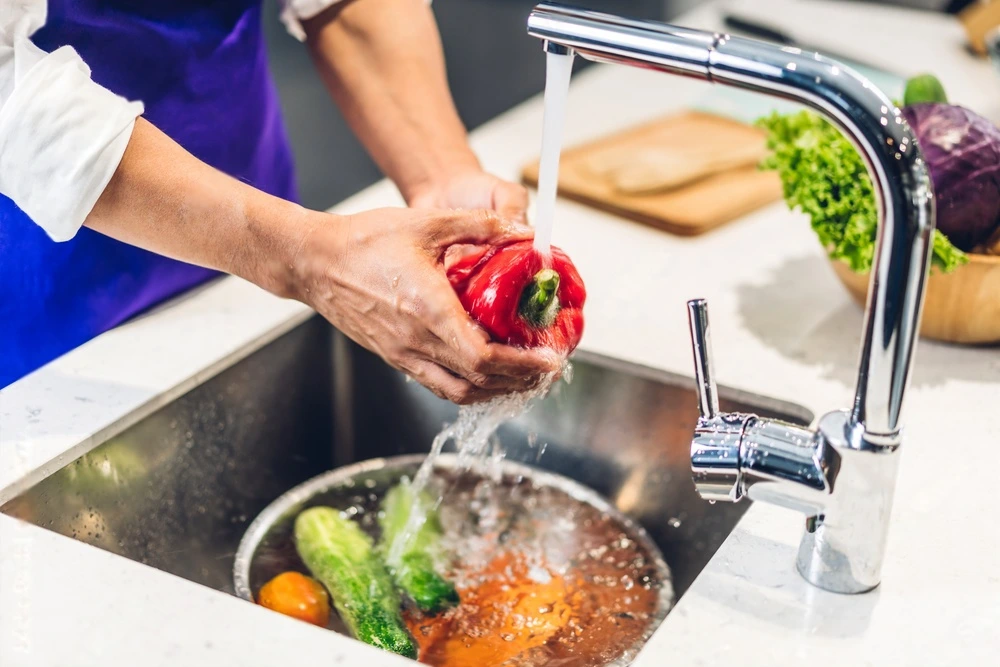
- Reducing Water Usage in Food Preparation: Simple practices like washing fruits and vegetables in a bowl rather than under running water can save gallons of water.
Effective Water Management Systems
- Greywater Systems: These systems recycle water from sinks and dishwashers for non-potable uses, such as watering plants.
- Water Recycling Methods: Implementing systems that treat and reuse water can be a game-changer in water conservation.
Behavioral Changes for Water Conservation
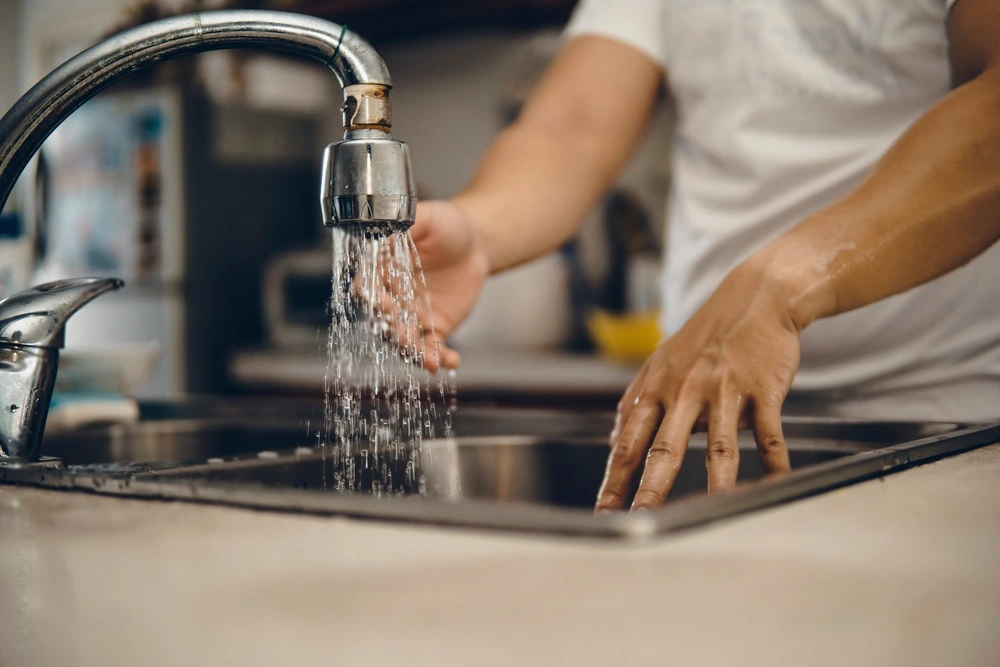
- Mindful Water Usage: Being conscious of the amount of water used in daily kitchen activities can lead to significant savings.
- Educating Household Members: Sharing water-saving tips with family members ensures that everyone contributes to conservation efforts.
Maintenance Tips for Water Efficiency
- Regular Checks and Repairs: Ensuring that all kitchen fixtures are in good working order can prevent leaks and unnecessary water wastage.
- Upgrading to Water-Efficient Models: Replacing old appliances and fixtures with water-efficient models can lead to long-term savings and sustainability.
Advanced Water-Saving Strategies
Innovative Water Recycling Technologies
- Greywater Systems: These systems take wastewater from sinks and dishwashers, treating it for reuse in non-potable applications like watering plants.
- Rainwater Harvesting: Collecting and using rainwater for kitchen purposes can significantly reduce the reliance on mains water.
Smart Water Sensors and Monitors
- Leak Detection: Installing smart water sensors can help in early detection of leaks, preventing water wastage.
- Usage Monitoring: Water monitors can track usage patterns and identify areas for improvement in water conservation.
Eco-Friendly Kitchen Cleaning Practices
- Biodegradable Cleaning Products: Using eco-friendly cleaning products reduces water pollution.
- Efficient Cleaning Methods: Adopting practices like using minimal water for cleaning and reusing rinse water can contribute to water savings.
Water Conservation Statistics
| Aspect | Statistic | Source |
| Average Daily Water Use per Person | 82 gallons | US EPA |
| Potential Savings with Water-Efficient Fixtures | 20% less water usage | US EPA |
| Annual Household Water Waste from Leaks | 9,400 gallons | US EPA |
| Water Saved by Running Full Dishwashers | 320 gallons annually | US EPA |
| Water Wastage by Running Tap for 5 Minutes | 10 gallons | US EPA |
Frequently Asked Questions
Implementing water-efficient appliances, adopting eco-friendly cleaning practices, and installing smart water sensors can significantly enhance water efficiency in your kitchen.
Yes, greywater systems are safe when properly installed and maintained. They effectively recycle water for non-potable uses, reducing overall water consumption.
Absolutely. Simple actions like turning off the tap while washing dishes or using minimal water for cleaning can collectively lead to substantial water savings.
While there may be an initial investment, retrofitting your kitchen with water-saving features can lead to significant long-term savings in water bills and contribute to environmental conservation.
Smart water sensors help in early leak detection and monitor water usage patterns, enabling timely interventions to prevent wastage and promote efficient water use.
Related Posts

Future Kitchen Technologies: Revolutionizing Home Cooking and Design
The kitchen, often considered the heart…


Tech-Advanced Kitchen Design: The Future of Culinary Spaces
The kitchen, traditionally the heart of…