

Minimalist kitchen design, a trend that has been gaining momentum, is not just about creating a space that looks clean and uncluttered. It’s about embracing simplicity while making a statement with textures. The key to a successful minimalist kitchen lies in the thoughtful use of materials, colors, and textures to create a space that is both functional and aesthetically pleasing.
Key Takeaways:
- Minimalist kitchens focus on simplicity, functionality, and clean lines.
- Textures play a crucial role in adding depth and interest to minimalist designs.
- Material choices, color schemes, and design integration are essential for a cohesive look.
- Trends in minimalist kitchen textures evolve, reflecting modern design preferences.
Key Elements of Minimalist Kitchen Textures
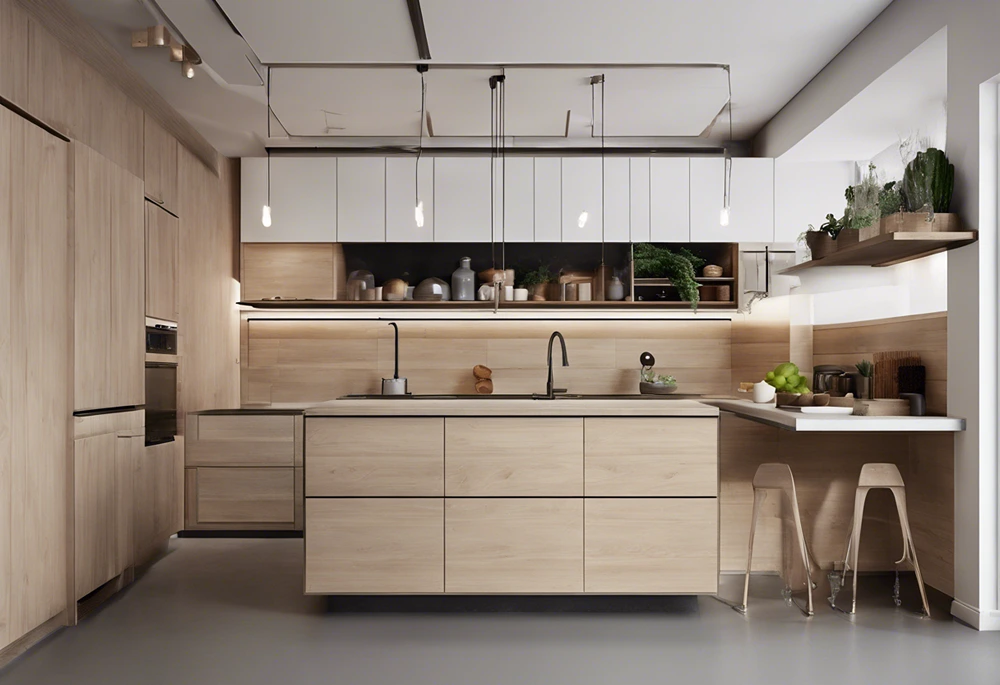
Material Choices and Their Impact
- Wood: Adds warmth and natural texture.
- Metal: Provides a sleek, modern look.
- Stone: Offers durability and unique patterns.
Color Schemes in Minimalist Kitchens
- Neutral Tones: Create a calm, serene atmosphere.
- Bold Accents: Add depth and focus to the design.
Trends in Minimalist Kitchen Textures for 2024
The year 2024 sees a shift towards more organic and natural textures in minimalist kitchens. The use of raw materials, such as untreated wood and stone, is on the rise, bringing an earthy feel to the modern kitchen.
Popular Trends:
- Natural Wood Finishes: Highlighting the beauty of grain patterns.
- Polished Concrete: For a sleek, industrial look.
- Matte Surfaces: Offering a subtle, sophisticated texture.
Material Choices for Minimalist Kitchen Textures
When selecting materials for a minimalist kitchen, consider both aesthetics and functionality. Durability, maintenance, and the ability to age gracefully are important factors.
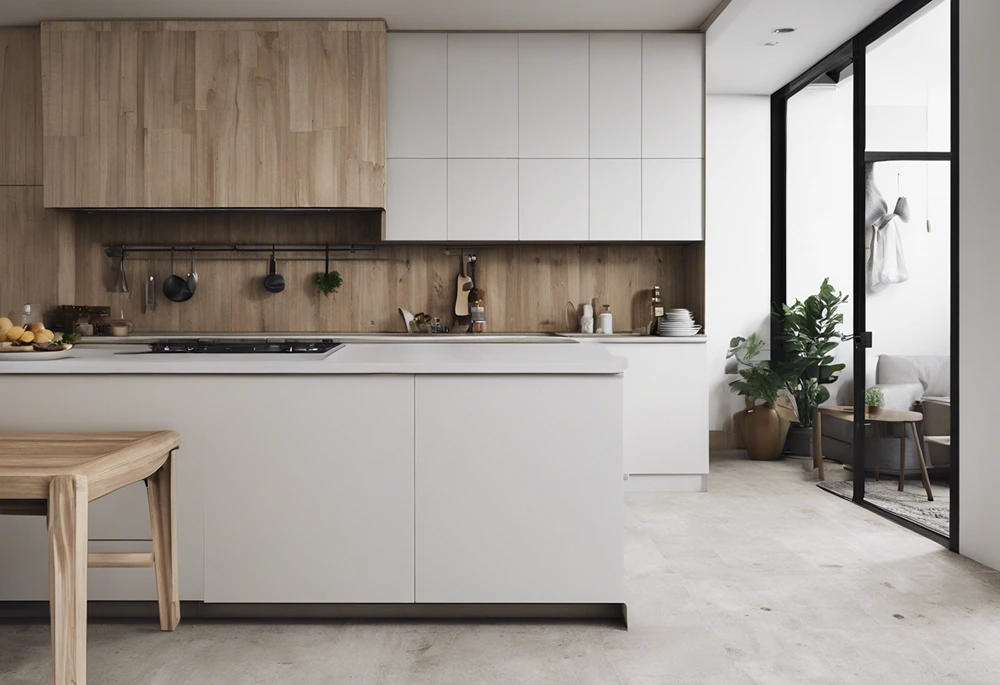
Table: Material Pros and Cons
| Material | Pros | Cons |
| Wood | Warm, natural look | Requires maintenance |
| Metal | Durable, modern | Can feel cold |
| Stone | Unique patterns, durable | Can be expensive |
Color Schemes and Textures in Minimalist Kitchens
The right color scheme can enhance the textures in a minimalist kitchen. Neutral palettes with occasional bold accents are popular, providing a backdrop that lets textures shine.
Table: Color Impact on Texture
| Color Scheme | Effect on Texture |
| Neutral | Highlights natural textures |
| Bold Accents | Draws attention to specific areas |
Designing Your Minimalist Kitchen: Texture Integration
Integrating textures in a minimalist kitchen requires a balance. It’s about creating interest without overwhelming the space. Here are some tips:
- Use a Variety of Textures: Combine different materials like wood, metal, and stone.
- Keep It Subtle: Let the textures be the focal point, not the colors.
- Balance is Key: Mix rough with smooth, matte with glossy.
Maintenance and Longevity of Textured Surfaces
To ensure your minimalist kitchen remains timeless, choose materials that are easy to maintain and age well. Regular cleaning and occasional maintenance will keep surfaces looking their best.
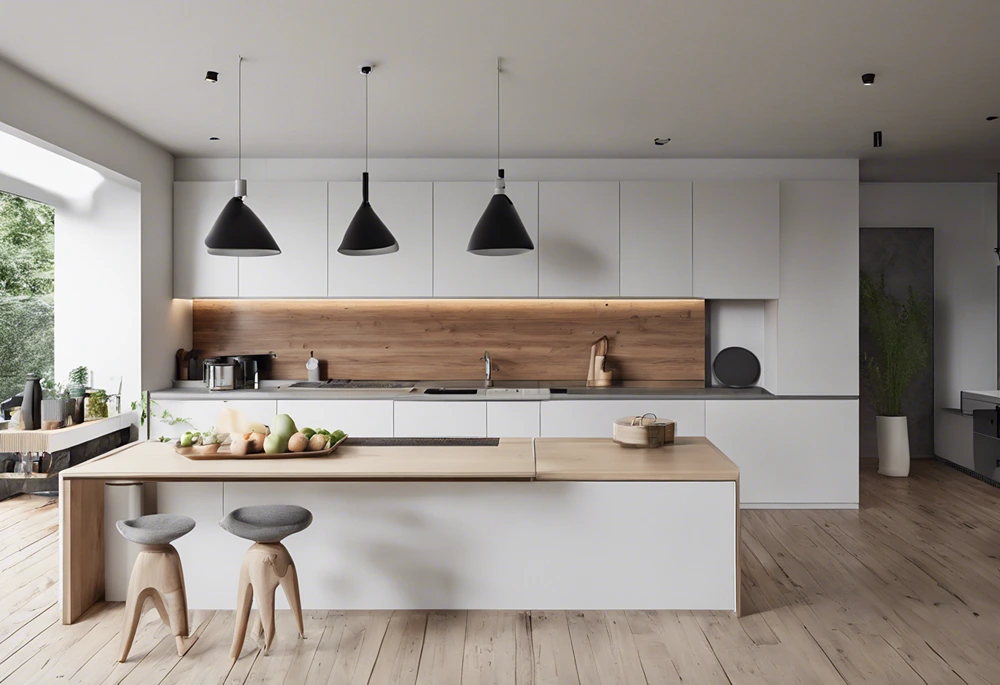
Table: Maintenance Tips for Textures
| Texture | Maintenance Tip |
| Wood | Regular oiling |
| Metal | Wipe with a damp cloth |
| Stone | Seal to prevent stains |
Case Studies: Successful Minimalist Kitchen Textures
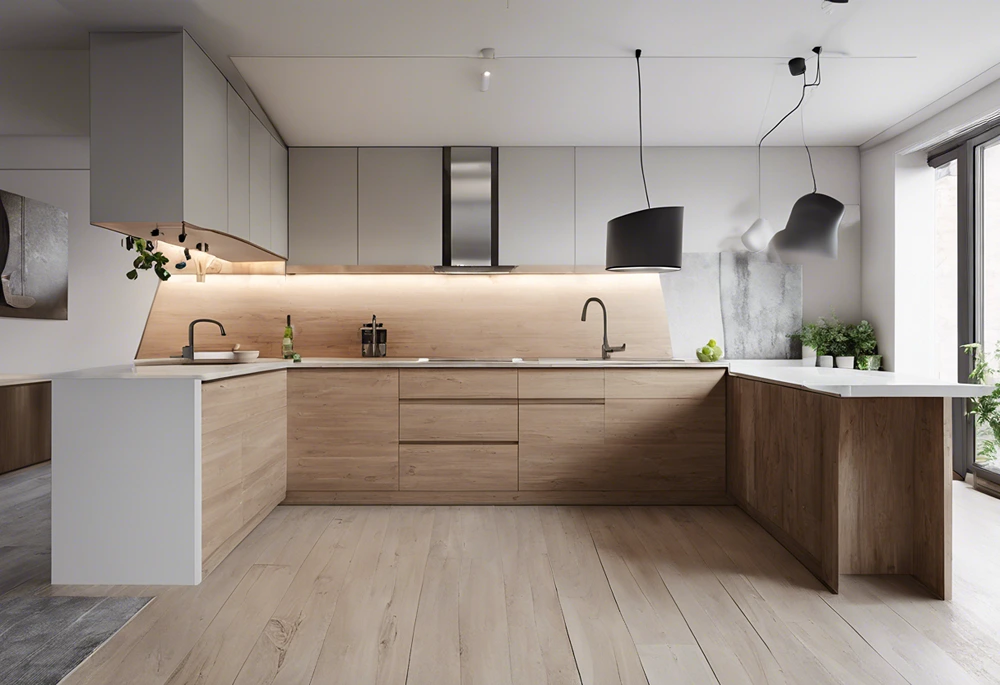
Case Study 1: Wood and White
- Design Elements: Natural wood cabinets with white countertops.
- Outcome: A warm, inviting space that remains clean and minimalist.
Case Study 2: Industrial Chic
- Design Elements: Polished concrete floors with metal accents.
- Outcome: A modern, edgy kitchen that’s both functional and stylish.
Practical Application of Minimalist Kitchen Textures
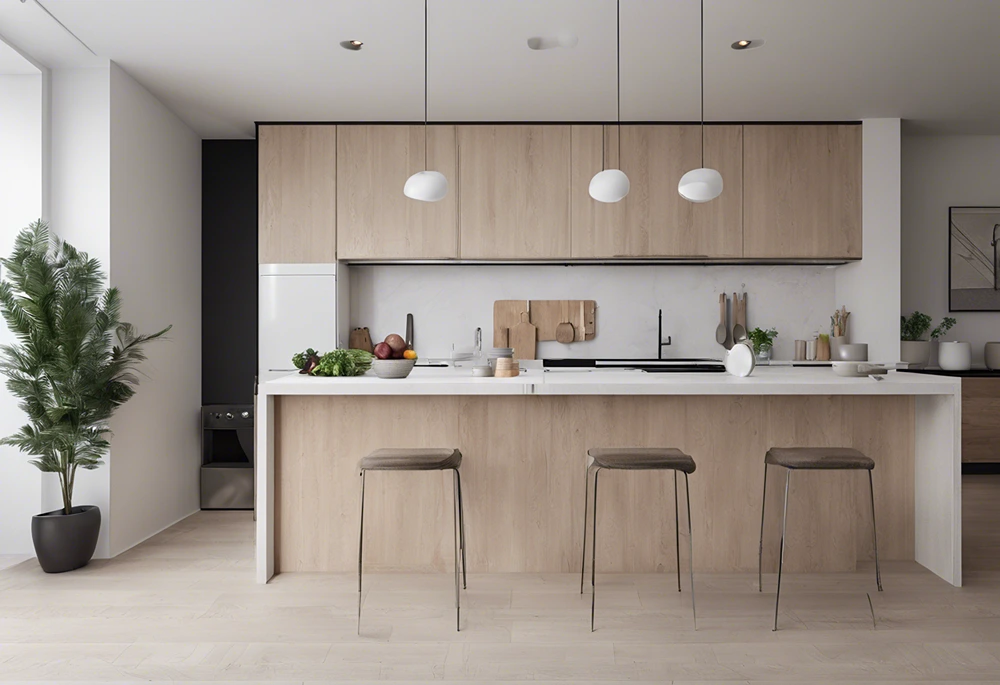
Incorporating Textures in Kitchen Design
- Balance: Mix smooth and rough textures for visual interest.
- Subtlety: Use textures to add depth without overwhelming the space.
- Functionality: Choose materials that are not only aesthetically pleasing but also practical for kitchen use.
Table: Textures and Their Applications
| Texture | Application | Benefit |
| Wood | Cabinets, Countertops | Warmth, Natural Feel |
| Metal | Fixtures, Hardware | Modern Look, Durability |
| Stone | Backsplashes, Countertops | Unique Patterns, Longevity |
Maintenance and Longevity of Minimalist Kitchen Textures
Table: Maintenance Tips for Common Materials
| Material | Maintenance Requirement |
| Wood | Regular oiling/sealing |
| Metal | Occasional polishing |
| Stone | Sealing to prevent stains |
Ensuring Longevity
- Regular Cleaning: Keep surfaces clean to prevent damage.
- Prompt Repairs: Address any chips or cracks immediately.
- Protective Measures: Use trivets and cutting boards to protect surfaces.
Case Studies: Minimalist Kitchen Textures in Practice
Case Study 3: Sleek and Functional
- Design Elements: Matte black fixtures with polished concrete floors.
- Outcome: A contemporary kitchen that balances functionality with style.
Case Study 4: Rustic Meets Modern
- Design Elements: Rough-hewn wood with stainless steel appliances.
- Outcome: A kitchen that blends rustic charm with modern amenities.
Frequently Asked Questions
- Consider the overall aesthetic you want to achieve.
- Balance different textures for a harmonious look.
- Think about maintenance and longevity.
- Yes, use bold colors as accents to add depth.
- Pair bold colors with neutral tones for balance.
- Opt for ample storage solutions.
- Keep countertops clear and organized.
- Regularly declutter and reorganize.
Related Posts

Future Kitchen Technologies: Revolutionizing Home Cooking and Design
The kitchen, often considered the heart…


Tech-Advanced Kitchen Design: The Future of Culinary Spaces
The kitchen, traditionally the heart of…