

Art Deco, a style synonymous with luxury, exuberance, and opulence, has left an indelible mark on interior design, particularly in kitchen aesthetics. Originating in the 1920s and 1930s, Art Deco is characterized by its bold geometric patterns, rich color palettes, and lavish materials. While the era of Art Deco might be in the past, its spirit continues to influence modern kitchen designs, blending historical elegance with contemporary functionality.
Key Takeaways:
- Art Deco kitchens are known for their bold geometric patterns and symmetrical layouts.
- Jewel tones and high-gloss surfaces are typical, adding a luxurious feel.
- Streamlined furniture and ornamental details are central to the Art Deco style.
- Modern interpretations often mix Art Deco elements with contemporary designs for a unique look.
The Essence of Art Deco in Kitchen Design

Historical Context and Definition
Art Deco, short for ‘Arts Décoratifs’, emerged in France in the early 1900s and flourished in America in the 1920s and 1930s. This style is often defined by its geometric patterns, bold jewel tones, and rich material palettes. Designers like Jennifer Durand from Jessica Lagrange Interiors highlight the timeless nature of Art Deco elements when used in contemporary settings.
Contemporary Relevance
Despite its historical roots, Art Deco’s appeal in modern kitchen design lies in its ability to add a touch of luxury and boldness. The style’s emphasis on streamlined forms and innovative materials makes it a perfect choice for those seeking a kitchen that combines both elegance and modern practicality.
Geometric Patterns and Symmetry in Art Deco Kitchens
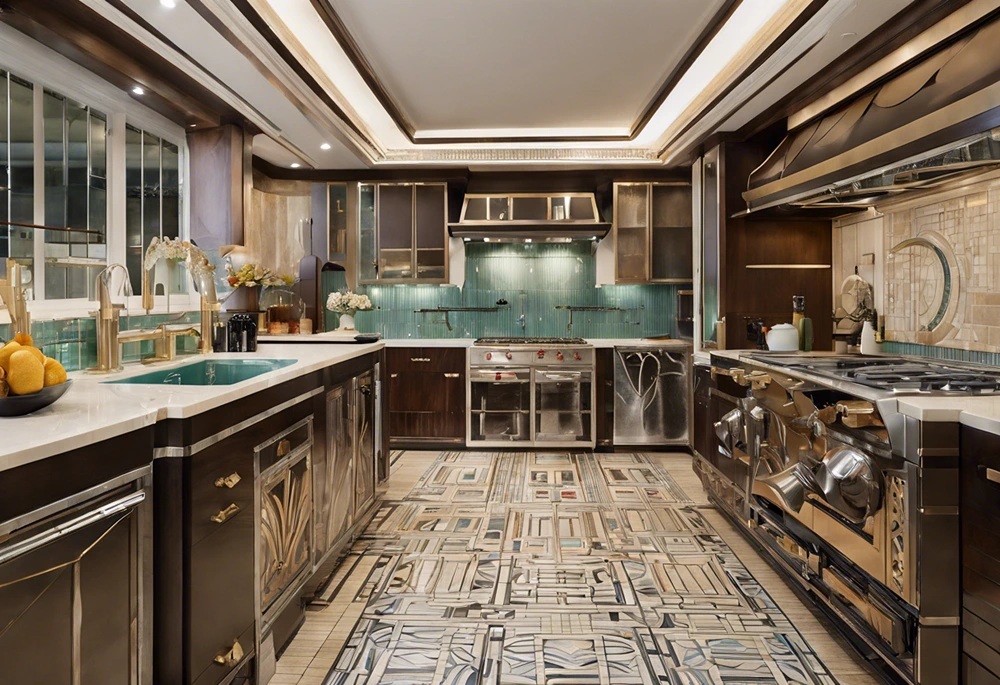
Importance of Shapes and Symmetry
Art Deco is renowned for its emphasis on geometric shapes like trapezoids, triangles, zigzags, and chevrons. These shapes not only create visual interest but also convey a sense of balance and symmetry, essential to the Art Deco aesthetic.
| Geometric Shape | Description in Art Deco Context |
| Trapezoids | Used in tile patterns and cabinetry designs |
| Triangles | Often seen in backsplash designs |
| Zigzags | Common in flooring and wall decorations |
| Chevrons | Used in detailing on furniture and accessories |
Color Schemes and Contrasts
The color palette in Art Deco kitchens typically involves bold colors like emerald, gold, and sapphire, often complemented by neutral shades such as beiges and creams. This combination not only adds richness but also creates a striking contrast that is quintessentially Art Deco.
Art Deco Kitchen Layouts and Furniture
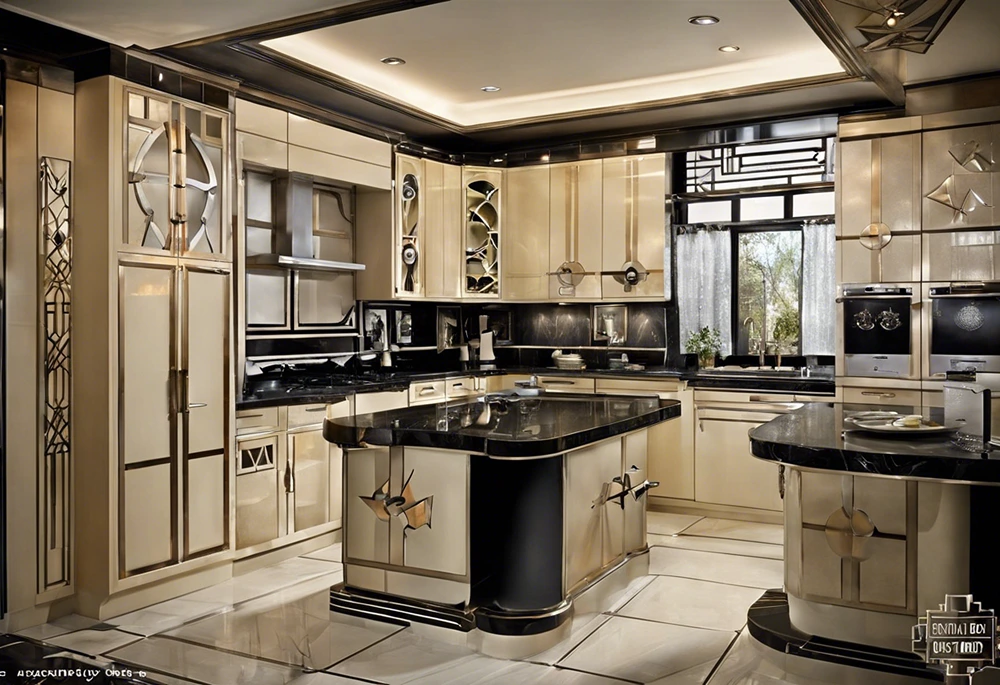
Innovative Layouts
The layout of an Art Deco kitchen is as important as its aesthetic elements. It combines functionality with style, often featuring streamlined workspaces and symmetrical arrangements. The focus is on creating a space that is both practical for cooking and visually appealing.
Furniture Choices
Choosing furniture for an Art Deco kitchen involves selecting pieces that resonate with the theme. Look for streamlined designs with geometric patterns and luxurious materials like lacquered wood or chrome finishes.
Decorative Elements and Materials in Art Deco Kitchens
Luxurious Materials and Finishes
Art Deco kitchens often feature materials that exude luxury. This includes lacquered surfaces, brass, stainless steel, and gilt. These materials not only add a rich texture to the kitchen but also reflect the era’s fascination with innovation and luxury.
Decorative Accents and Artwork
To truly capture the essence of Art Deco, incorporating decorative accents and artwork is key. This can include ornamental light fixtures, such as chandeliers or sconces, and art pieces that reflect the boldness and opulence of the era.
Lighting and Accessories in Art Deco Kitchens
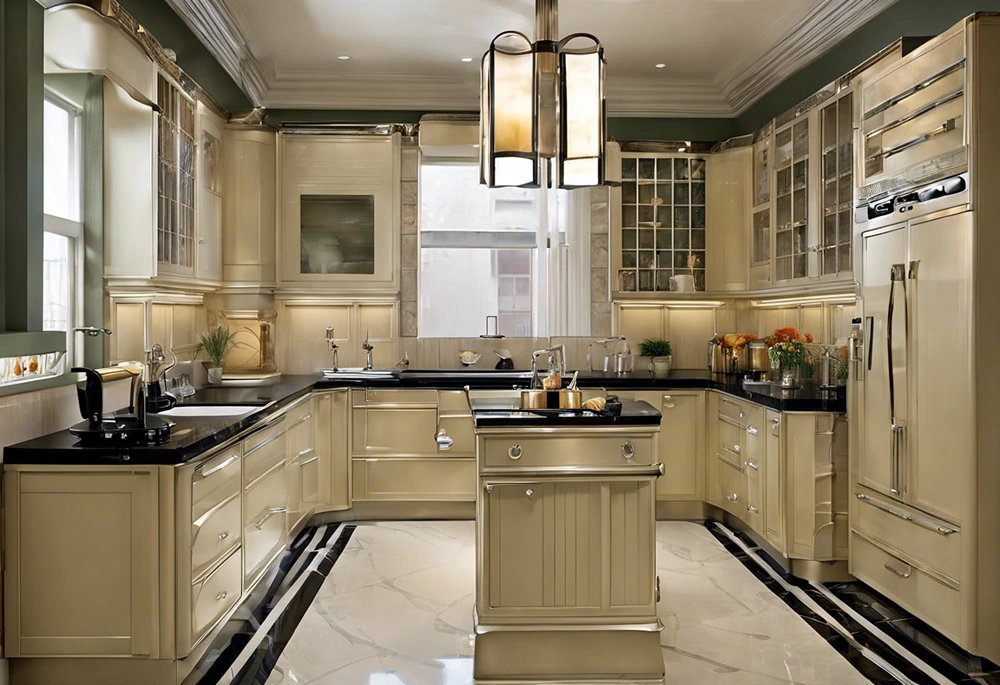
Statement Lighting
Lighting in an Art Deco kitchen is not just functional; it’s a statement piece. Chandeliers and sconces with geometric designs and metallic finishes are typical, adding both illumination and decorative flair.
Accessorizing Your Kitchen
Accessorizing an Art Deco kitchen involves choosing items that align with the theme’s luxurious and bold nature. This can include decorative vases, statement clocks, and elegant glassware.
Innovative Storage Solutions in Art Deco Kitchens
Art Deco is not just about aesthetics; it’s also about functionality. Modern Art Deco kitchens incorporate clever storage solutions that maintain the sleek lines and geometric patterns characteristic of the style.
Custom Cabinetry
Custom cabinets in Art Deco kitchens often feature bold, geometric patterns with luxurious finishes like lacquer or high-gloss paint. Chrome or brass hardware adds a touch of glamour.
Open Shelving and Glass-Front Cabinets
Open shelving or glass-front cabinets are perfect for displaying Art Deco-inspired dinnerware or collectibles, adding both functionality and style to the kitchen.
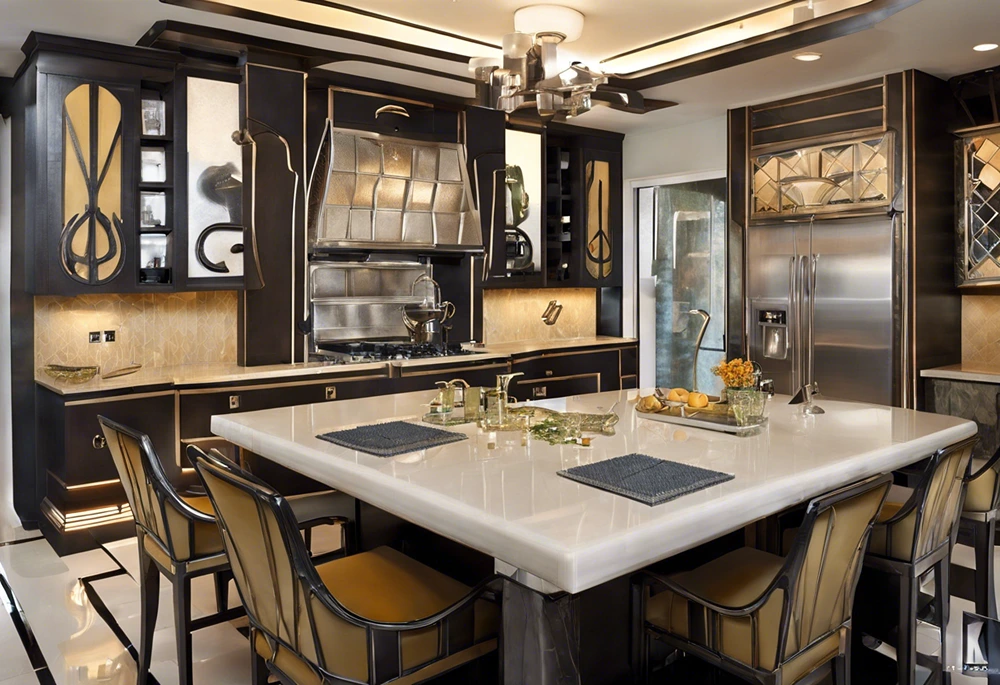
Integrating Modern Technology in Art Deco Kitchens
Incorporating modern appliances and technology into an Art Deco kitchen is essential for functionality. The key is to blend these modern elements without detracting from the vintage charm.
Smart Appliances
Choose appliances with sleek, streamlined designs that complement the Art Deco style. Smart appliances in neutral or metallic finishes integrate well into the Art Deco palette.
Innovative Lighting
Modern LED lighting can be used to highlight Art Deco architectural features and artwork. Consider smart lighting systems that allow you to control the ambiance to match the mood of the space.
Blending Art Deco with Contemporary Trends
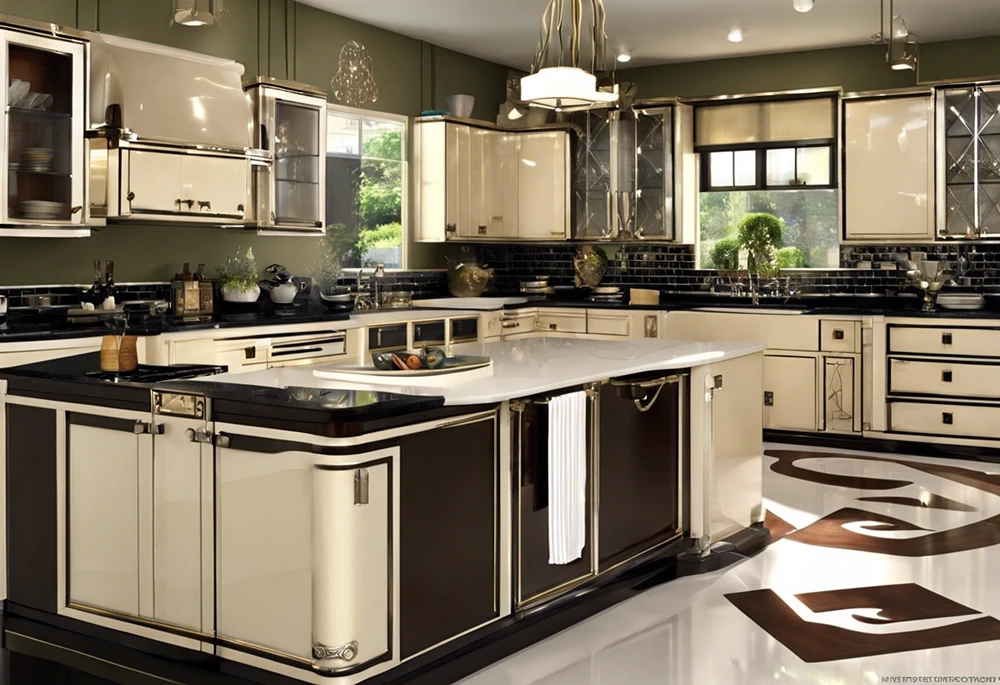
Art Deco kitchens can be beautifully blended with contemporary design elements to create a space that is both timeless and modern.
Mixing Materials
Combine traditional Art Deco materials like brass and marble with modern materials like stainless steel or concrete for a contemporary twist.
Contemporary Color Palettes
While traditional Art Deco colors are bold and vibrant, incorporating softer, more contemporary hues can create a more subdued yet equally elegant look.
Frequently Asked Questions
- Geometric patterns and symmetrical designs.
- Luxurious materials like lacquer, brass, and marble.
- Bold color palettes with jewel tones.
- Ornate lighting fixtures and decorative accents.
- Incorporate modern appliances with sleek designs.
- Use a mix of traditional and contemporary materials.
- Choose a softer color palette for a more modern feel.
- Add smart home technology for functionality.
- Yes, by focusing on key elements like color and patterns.
- Use Art Deco-inspired accessories and hardware for a budget-friendly update.
- Consider DIY projects like painting cabinets or adding decorative backsplashes.
Related Posts

Future Kitchen Technologies: Revolutionizing Home Cooking and Design
The kitchen, often considered the heart…


Tech-Advanced Kitchen Design: The Future of Culinary Spaces
The kitchen, traditionally the heart of…