

The kitchen, often the heart of the home, is also a significant contributor to household energy consumption. With the growing awareness of environmental issues and the rising cost of energy, designing an energy-efficient kitchen has become not just a trend but a necessity. This article, presented by Glasgow Tradespeople, delves into the various aspects of creating a kitchen that is both stylish and sustainable.
Key Takeaways:
- Energy Efficiency in Appliances: Selecting energy-efficient appliances can significantly reduce energy consumption.
- Sustainable Materials: Using sustainable materials like bamboo or reclaimed wood for cabinets and countertops.
- Natural Lighting: Optimizing natural light reduces the need for artificial lighting, saving energy.
- Smart Technologies: Incorporating smart kitchen technologies for better energy management.
- Renewable Energy Integration: Utilizing renewable energy sources, such as solar power, for a sustainable kitchen.
The Importance of an Energy-Efficient Kitchen
Understanding Energy Consumption in Kitchens
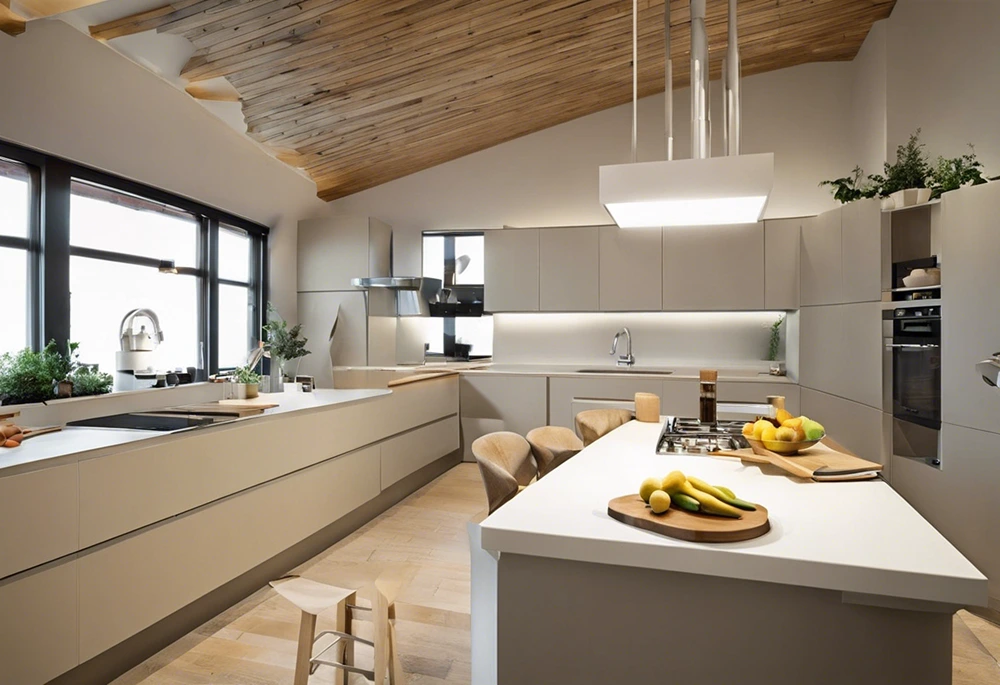
According to the Department of Energy, kitchen appliances account for nearly 15% of a household’s total energy usage. This figure increases when factoring in heating, cooling, and lighting. An energy-efficient kitchen design focuses on reducing this consumption, optimizing appliance use, and leveraging sustainable materials.
Benefits of Energy-Efficient Kitchens
- Reduced Energy Bills: Energy-efficient appliances and design choices lead to lower utility bills.
- Environmental Impact: Lower energy consumption means a smaller carbon footprint.
- Enhanced Kitchen Functionality: Efficient design improves the overall functionality and aesthetics of the kitchen.
Designing for Efficiency
Strategic Placement of Kitchen Elements
- Cabinet Placement: Position cabinets to maximize natural light, reducing the need for artificial lighting.
- Appliance Selection: Choose energy-efficient appliances, like convection ovens, that use less energy and produce less heat.
Sustainable Material Choices
- Cabinets: Opt for sustainable materials like bamboo or reclaimed wood.
- Countertops: Use recycled glass or composite stone for a stylish yet eco-friendly choice.
Renewable Energy Integration
- Solar Power: Incorporate solar panels to harness renewable energy for kitchen appliances.
- Induction Cooking: Switch to induction stoves that are more efficient than traditional gas or electric stoves.
Efficient Lighting Solutions
- LED Technology: Use LED lights for their energy efficiency and longevity.
- Strategic Lighting Placement: Employ ambient, task, and accent lighting to enhance functionality and aesthetics.

High-Quality Appliances: The Heart of an Energy-Efficient Kitchen
Energy-Efficient Cooking Appliances
- Stoves: Gas hobs are preferred for their direct heat transfer and efficient energy use.
- Ovens: Convection ovens distribute heat evenly, reducing cooking time and energy usage.
Smart Refrigeration Practices
- Optimal Placement: Keep refrigerators away from heat sources to reduce energy needed for cooling.
- Temperature Management: Set the right temperature to balance energy use and food preservation.
Dishwashers and Water Usage
- Water-Efficient Models: Modern dishwashers use less water and are more energy-efficient.
- Load Adjustments: Use dishwashers at full capacity to avoid wastage of water and energy.
Regular Maintenance and Monitoring
- Routine Checks: Regular maintenance of appliances ensures optimal energy performance.
- Energy Monitoring: Keep track of appliance usage to identify areas for energy savings.
Insulation and Ventilation: Key to Energy Efficiency

Insulation in the Kitchen
- Walls, Floors, and Ceilings: Proper insulation prevents heat loss in winters and keeps the kitchen cool in summers.
- Appliance Seals: Regularly check and replace seals on refrigerators and ovens for better energy efficiency.
Effective Ventilation Systems
- Range Hoods and Exhaust Fans: High-quality ventilation systems manage heat, moisture, and odors efficiently.
- Humidity Control: Proper ventilation maintains ideal indoor humidity levels, promoting healthier air quality.
Balancing Ventilation and Energy Use
- Energy-Efficient Ventilation Appliances: Choose Energy Star-certified devices for additional energy savings.
- Avoid Over-Ventilation: Ensure adequate air exchange without causing excess energy loss.
Water Efficiency: A Crucial Aspect of Kitchen Design
Choosing Water-Efficient Appliances
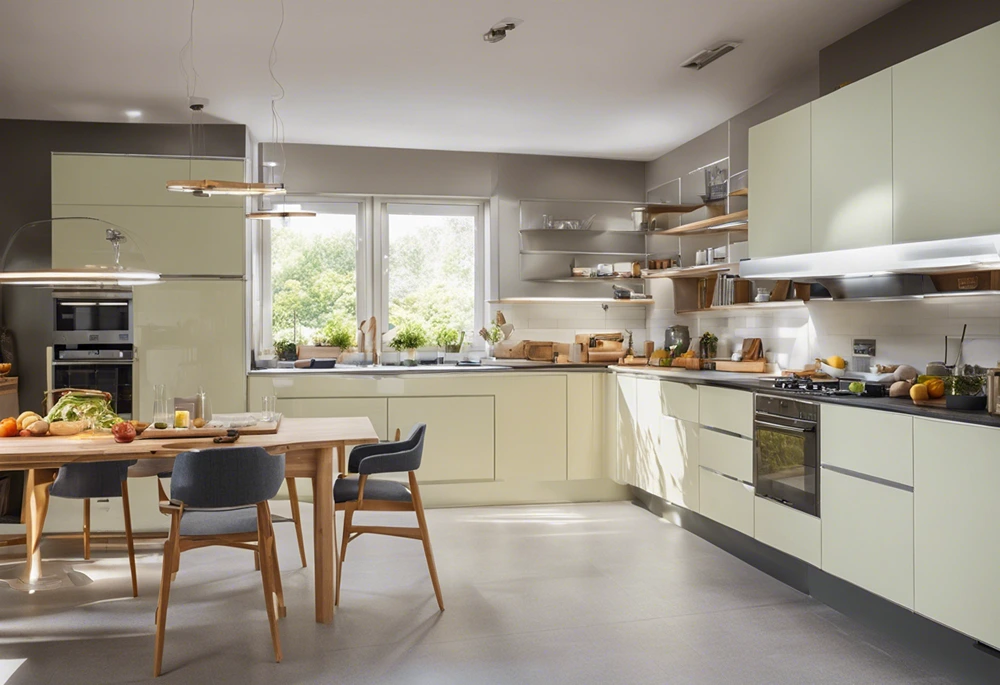
- Dishwashers: Energy Star-certified dishwashers save both energy and water.
- Faucets: High-efficiency faucet aerators regulate water flow, leading to savings.
Maintenance for Water Efficiency
- Regular Checks: Identify potential leaks in appliances to ensure maximum efficiency.
Practical Tips for Energy Efficiency
1. Smart Appliances and Energy Labels
When selecting kitchen appliances, look for the ENERGY STAR label. ENERGY STAR-certified appliances meet strict energy efficiency guidelines and can significantly reduce your energy consumption. Here’s a table highlighting common kitchen appliances and their typical energy consumption:
| Appliance | Typical Energy Consumption |
| Refrigerator | 100-800 kWh/year |
| Dishwasher | 120-300 kWh/year |
| Oven | 100-500 kWh/year |
| Induction Cooktop | 50-100 kWh/year |
| LED Lighting | 10-25 kWh/year |
2. Efficient Water Use
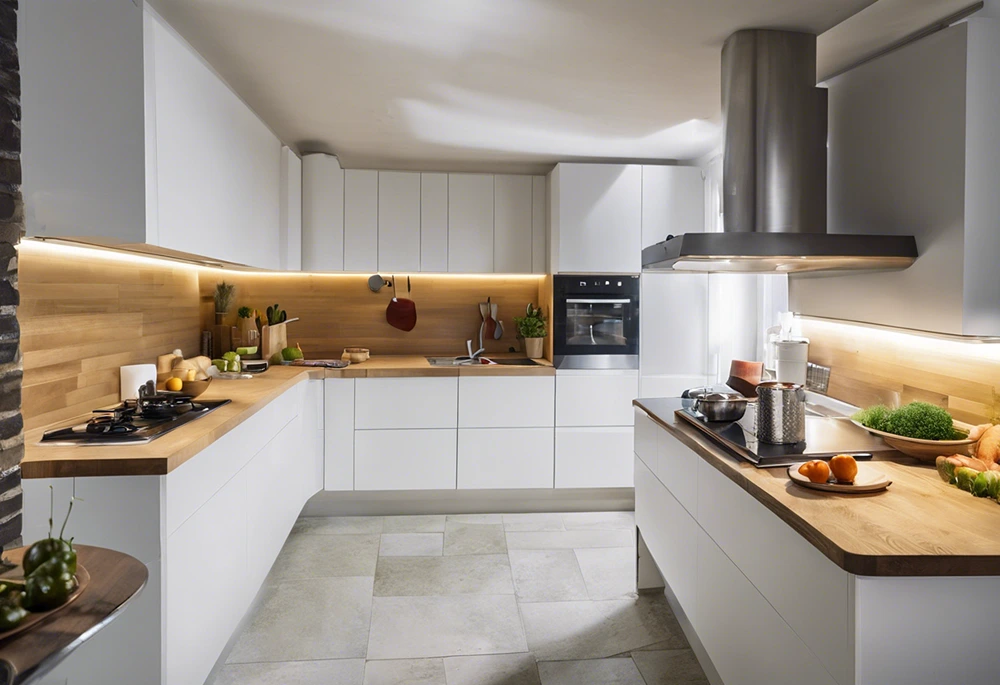
Efficient water use in the kitchen is essential for both energy and water savings. Consider installing a high-efficiency faucet aerator to regulate water flow. Here’s a comparison of water consumption for different kitchen activities:
| Kitchen Activity | Water Consumption (Gallons) |
| Hand Washing | 2-4 |
| Dishwasher (Full Load) | 6-12 |
| Dishwasher (Hand Washing) | 20-25 |
3. Natural Light Optimization
Maximizing natural light reduces the need for artificial lighting. Here are some design considerations for optimizing natural light:
- Window Placement: Strategically position windows to allow ample daylight.
- Glass Doors: Consider glass doors for cabinets to distribute light evenly.
- Reflective Surfaces: Use reflective surfaces, like mirrors or light-colored countertops, to bounce light.
4. Energy-Efficient Lighting
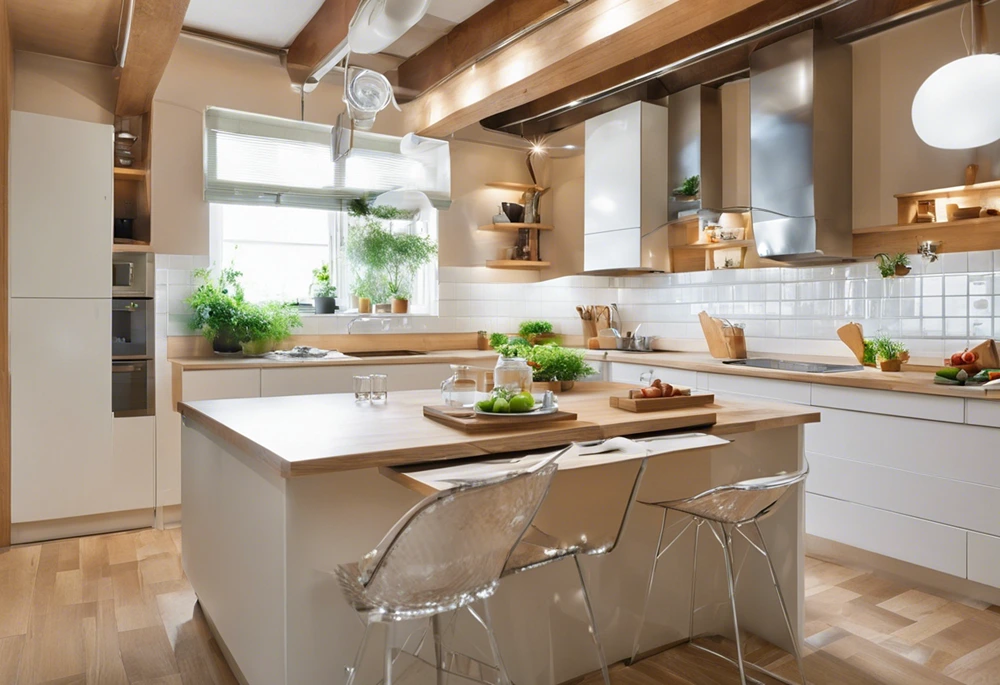
LED lighting is the most energy-efficient option for kitchen illumination. Let’s compare LED lights with traditional incandescent bulbs:
| Light Type | Energy Efficiency | Lifespan (Hours) |
| LED | 90-95% | 25,000-50,000 |
| Incandescent | 10% | 1,000 |
5. Home Energy Monitoring Systems
Consider investing in a home energy monitoring system. These devices provide real-time insights into your energy consumption, helping you identify areas for improvement and potential energy-saving opportunities.
Frequently Asked Questions (FAQs)
Energy-efficient appliances may have a slightly higher upfront cost, but they often result in long-term savings on energy bills, making them a cost-effective choice.
Yes, you can retrofit your existing kitchen with energy-efficient appliances, lighting, and insulation to improve its energy efficiency.
To reduce energy consumption while cooking, use lids on pots and pans, match the pot size to the burner, and consider using microwave ovens for reheating.
The return on investment (ROI) for an energy-efficient kitchen varies depending on the upgrades made and energy savings achieved. Generally, the ROI can be seen within a few years through reduced energy bills.
Yes, renewable energy sources like solar power can provide sufficient energy to power your entire kitchen, including appliances, lighting, and HVAC systems.
Related Posts

Future Kitchen Technologies: Revolutionizing Home Cooking and Design
The kitchen, often considered the heart…


Tech-Advanced Kitchen Design: The Future of Culinary Spaces
The kitchen, traditionally the heart of…