

Farmhouse kitchens, a style that has seen a resurgence in popularity, offer a unique blend of traditional charm and modern convenience. These kitchens are characterized by their practicality, warmth, and inviting atmosphere. As Glasgow Tradespeople, we understand the importance of creating a space that is not only functional but also aesthetically pleasing. This article delves into the world of farmhouse kitchen styles, exploring their key characteristics, design elements, and how to blend them seamlessly into your home.
Key Takeaways
- Farmhouse kitchens combine rustic charm with modern amenities.
- Key elements include natural materials, open shelving, and a warm color palette.
- Design tips involve balancing traditional and contemporary elements for a cohesive look.
Understanding Farmhouse Kitchen Styles
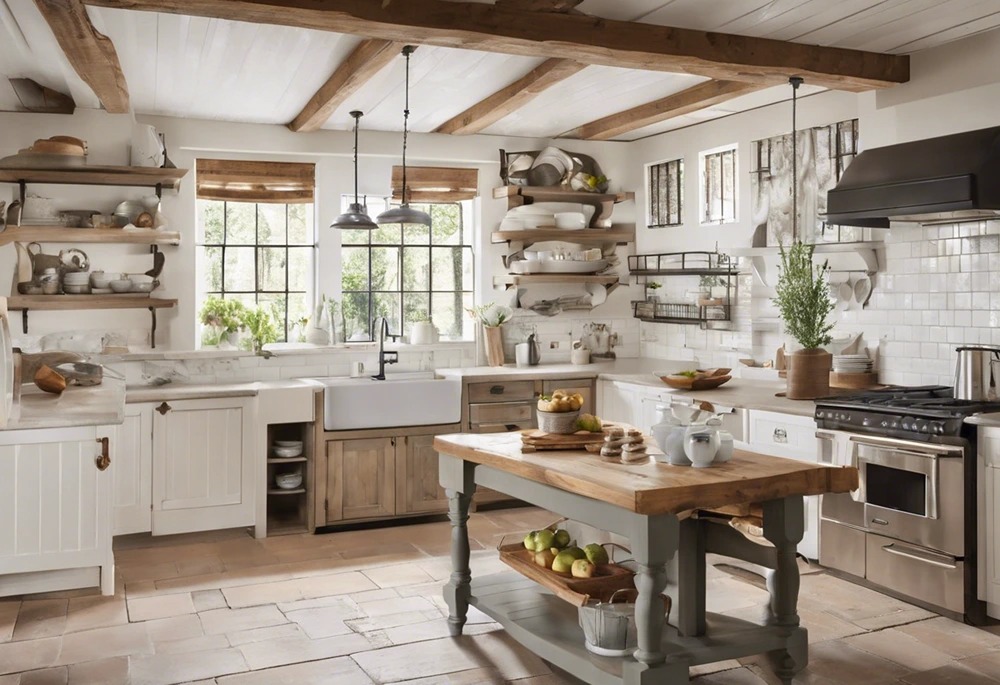
The Essence of Farmhouse Kitchens
Farmhouse kitchens are more than just a design trend; they are a testament to a lifestyle that values simplicity, warmth, and functionality. These kitchens are known for their spacious layouts, natural materials, and a sense of welcoming comfort.
Historical Roots and Modern Interpretations
The farmhouse kitchen has its roots in the simple, functional spaces of rural homes. Historically, these kitchens were the heart of the home, where families gathered and meals were prepared. Today, modern interpretations blend these traditional elements with contemporary design, creating spaces that are both nostalgic and forward-thinking.
Designing a Farmhouse Kitchen
Key Characteristics
- Natural Materials: Wood is a staple in farmhouse kitchens, often seen in exposed beams, hardwood floors, and cabinetry.
- Color Schemes: Warm and inviting colors, such as creams, whites, and soft pastels, dominate the palette.
- Open Shelving: This feature adds a sense of openness and accessibility, displaying dishware and kitchen essentials.
Modern vs. Traditional Farmhouse Kitchens
The modern farmhouse kitchen brings a contemporary twist to traditional design. It often incorporates stainless steel appliances, sleek lighting, and minimalist decor, while retaining the rustic charm of the classic farmhouse style.
Essential Elements of Farmhouse Kitchen Design
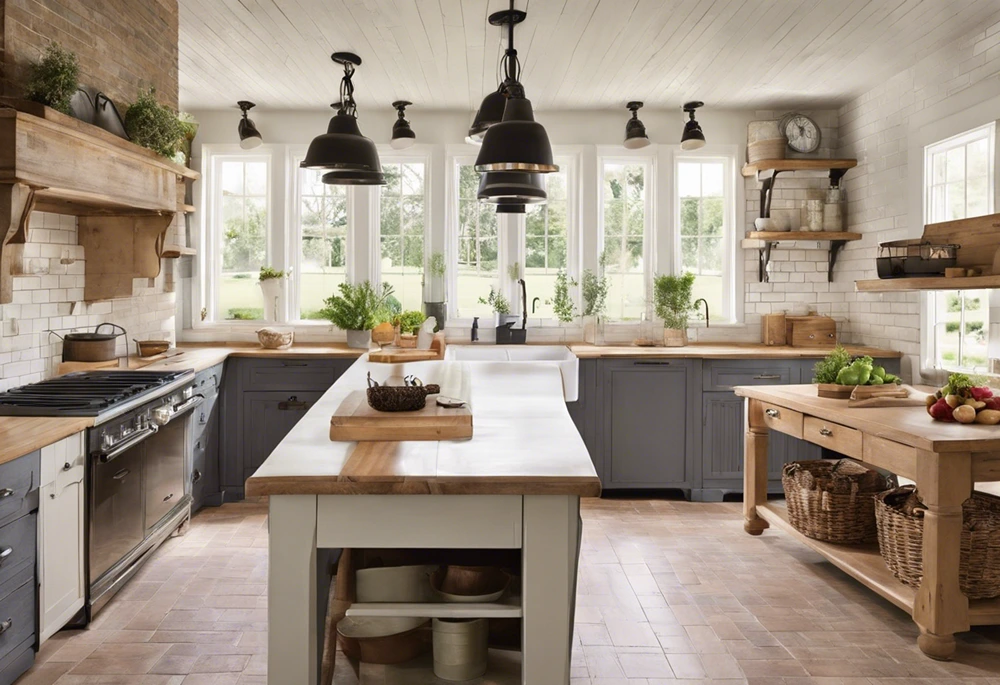
Woodwork and Cabinetry
Wooden cabinets, often painted or left in their natural state, are a hallmark of the farmhouse style. They provide warmth and a sense of timelessness.
The Farmhouse Sink
A large, apron-front sink is a quintessential element. It’s not only practical for handling large pots and pans but also serves as a focal point in the design.
Rustic Lighting Fixtures
Lighting in a farmhouse kitchen often includes pendant lights with a rustic or industrial feel, enhancing the overall ambiance.
Color Palettes and Textures
Choosing the Right Colors
Select colors that evoke a sense of calm and warmth. Neutral tones, such as whites and creams, are popular, but don’t be afraid to add splashes of color with accents like curtains or rugs.
Incorporating Textures
Textures play a crucial role in farmhouse kitchens. Elements like a rough-hewn wooden table or a braided rug add depth and interest to the space.
Furniture and Decor
Selecting Tables and Chairs
Choose furniture that reflects the rustic aesthetic. Farmhouse tables, often made of reclaimed wood, paired with mismatched chairs, create a relaxed and welcoming setting.
Decorative Elements
Decor in a farmhouse kitchen should be functional yet charming. Vintage utensils, mason jars, and ceramic pots are not only practical but also add to the decor.
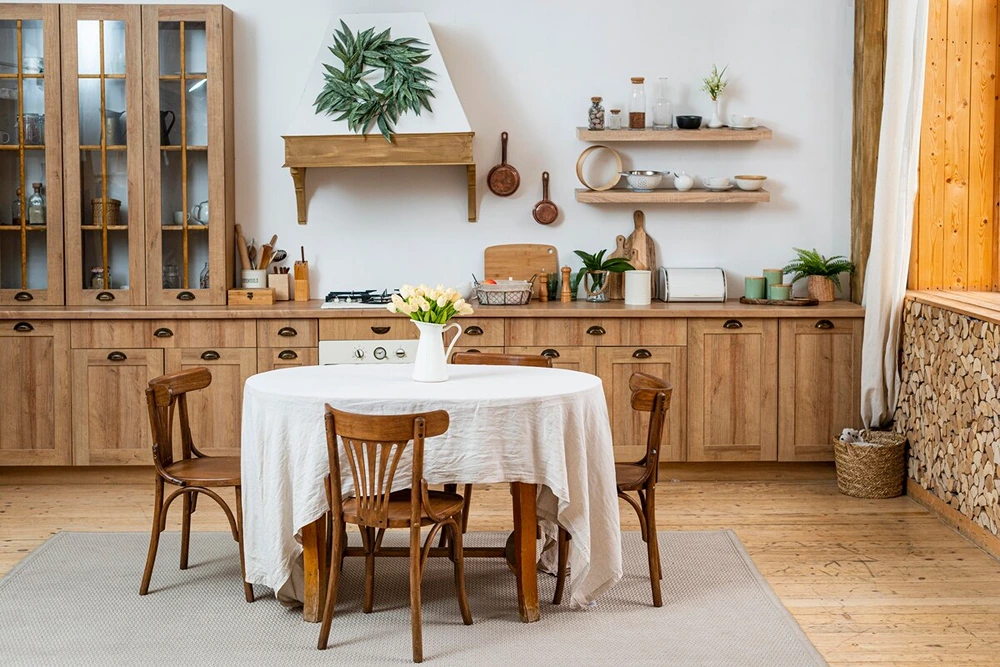
Flooring and Backsplash Ideas
Durable and Rustic Flooring Options
Hardwood or stone floors are ideal for farmhouse kitchens, offering durability and a rustic appeal.
Backsplash Materials and Patterns
A backsplash in materials like subway tile or shiplap adds character and is easy to clean – a practical aspect of kitchen design.
Incorporating Modern Elements
Modern Appliances in a Farmhouse Setting
Modern appliances can be integrated seamlessly into a farmhouse kitchen. Stainless steel appliances add a touch of modernity while maintaining the kitchen’s rustic charm.
Balancing Rustic Charm with Modern Convenience
The key to a successful farmhouse kitchen is balancing rustic elements with modern conveniences. This creates a space that is both charming and functional.
Advanced Design Tips for Farmhouse Kitchens
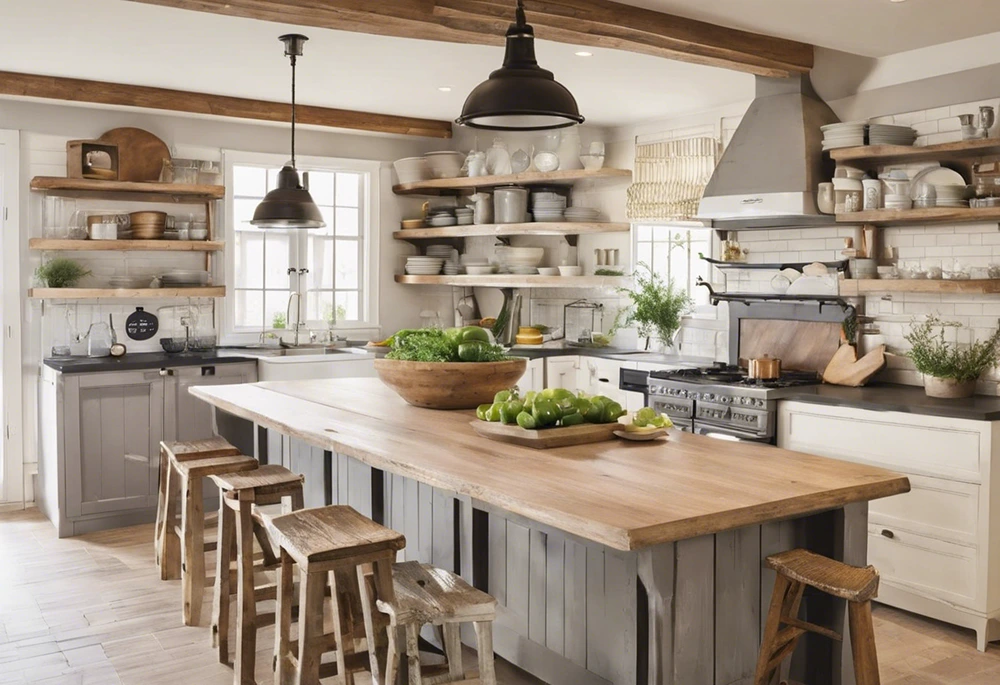
Maximizing Storage in Style
- Open Shelving vs. Cabinetry: Balance open shelving with traditional cabinetry for a mix of display and storage.
- Island Storage Solutions: Utilize the kitchen island for additional storage and workspace.
Integrating Technology Seamlessly
- Smart Kitchen Appliances: Choose appliances that blend with the kitchen’s rustic aesthetic while offering modern functionality.
- Hidden Charging Stations: Incorporate charging stations in drawers or cabinets to keep technology discreet.
Lighting and Ambiance
- Layered Lighting: Combine overhead, task, and accent lighting for a warm and inviting atmosphere.
- Dimmer Switches: Install dimmer switches to adjust lighting for different times of the day.
Table Settings and Decor
- Mix and Match Tableware: Combine vintage and modern pieces for a unique table setting.
- Textile Choices: Opt for natural textiles like linen or cotton for tablecloths and napkins.
Practical Aspects of Farmhouse Kitchen Design
Choosing Durable Materials
- Countertop Options: Consider materials like granite, quartz, or butcher block for durability and style.
- Flooring Durability: Opt for hardwood or tile flooring for longevity and ease of maintenance.
Space Planning and Layout
- Efficient Work Triangle: Ensure the sink, stove, and refrigerator are placed for optimal workflow.
- Spacious Walkways: Plan for ample space between counters and the island for easy movement.
Eco-Friendly Design Choices
- Sustainable Materials: Use reclaimed wood, recycled glass, and other eco-friendly materials.
- Energy-Efficient Appliances: Select appliances with high energy efficiency ratings.
Frequently Asked Questions
- Natural materials like wood and stone
- Open shelving and spacious layout
- Rustic, vintage decor and accessories
- Integrate modern appliances and fixtures
- Use a neutral color palette with pops of color
- Blend traditional and contemporary design elements
- Neutral tones like white, cream, and soft pastels
- Accents in blues, greens, and earthy tones
- Bold colors used sparingly for contrast
- Use a mix of pendant lights, chandeliers, and under-cabinet lighting
- Incorporate natural light with large windows or skylights
- Choose fixtures that complement the rustic aesthetic
Related Posts

Future Kitchen Technologies: Revolutionizing Home Cooking and Design
The kitchen, often considered the heart…


Tech-Advanced Kitchen Design: The Future of Culinary Spaces
The kitchen, traditionally the heart of…