

Renovating a kitchen with an eco-friendly mindset not only contributes to environmental sustainability but also enhances the overall aesthetics and functionality of your home. In this comprehensive guide, we delve into various aspects of green kitchen renovation, offering practical tips and innovative ideas to transform your kitchen into an eco-friendly haven.
Key Takeaways:
- Sustainable Materials: Opt for eco-friendly cabinetry, countertops, and flooring.
- Energy Efficiency: Choose Energy Star-rated appliances and LED lighting.
- Water Conservation: Install efficient faucets and adopt water-saving practices.
- Aesthetic and Functional Design: Embrace green color schemes and efficient layouts.
- Budgeting: Plan for cost-effective and long-term sustainable solutions.
Sustainable Materials and Products

Eco-Friendly Cabinetry Options
When it comes to cabinetry, the choice of material plays a crucial role in determining the environmental impact of your kitchen renovation. Opting for sustainable wood, such as bamboo or reclaimed wood, not only reduces deforestation but also adds a unique aesthetic appeal to your kitchen.
Countertops and Flooring Materials
Similarly, countertops and flooring should be chosen based on their sustainability credentials. Materials like recycled glass, sustainable wood, or composite materials offer durability and style while being kind to the planet.
Energy-Efficient Appliances and Lighting
Choosing Energy-Saving Kitchen Appliances
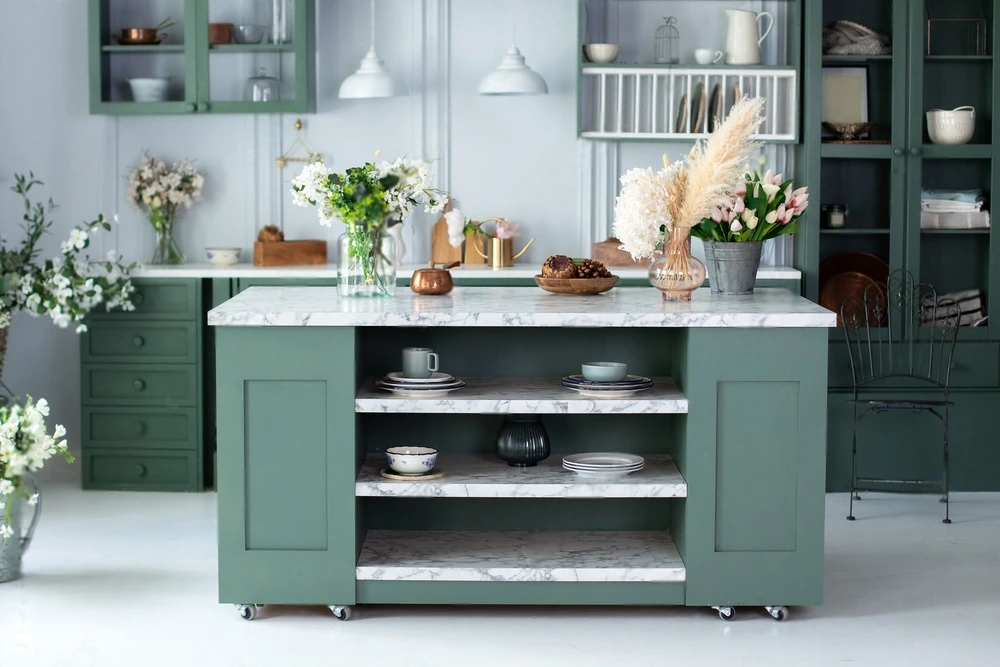
The heart of a green kitchen lies in its appliances. Energy Star-rated appliances are a must for any eco-friendly kitchen. These appliances, ranging from refrigerators to dishwashers, are designed to minimize energy consumption, thereby reducing your carbon footprint and utility bills.
Importance of LED and Natural Lighting
Lighting is another critical aspect of energy efficiency. LED lighting, known for its low energy consumption and long lifespan, is an ideal choice. Additionally, maximizing natural light through strategic window placement can significantly reduce the need for artificial lighting during the day.
Water Conservation Techniques
Efficient Faucets and Water Systems
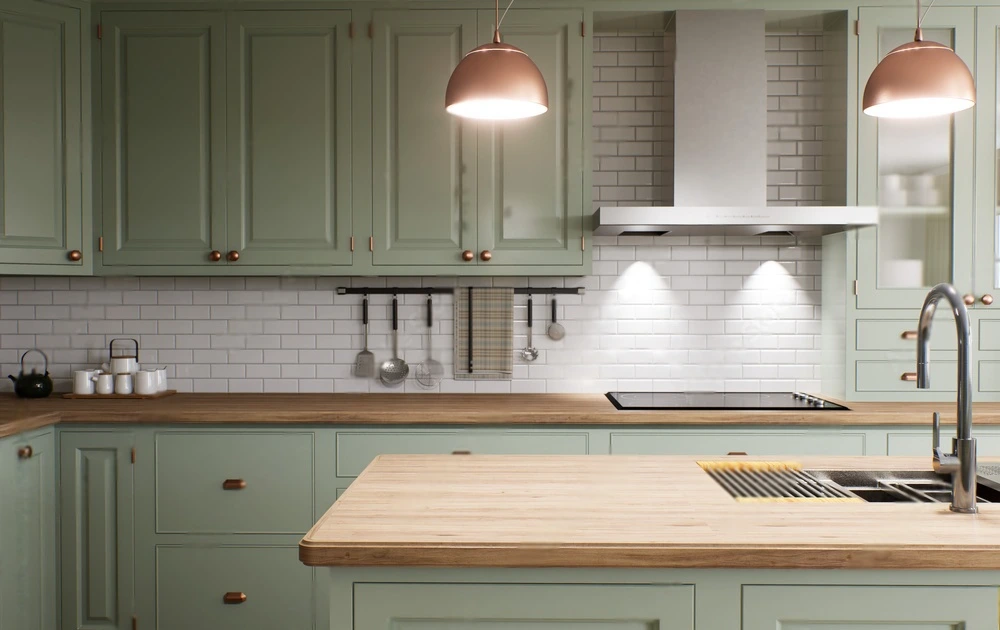
Water conservation is integral to green kitchen design. Installing low-flow faucets and considering systems like greywater recycling can dramatically reduce water usage. Simple practices like fixing leaks promptly also contribute significantly to water conservation.
Tips for Reducing Water Usage
- Use aerators on taps to reduce flow.
- Opt for dishwashers with water-saving features.
- Practice efficient dishwashing and cooking habits to minimize water waste.
Aesthetic Considerations

Color Schemes and Design Trends
Green kitchens are not just about sustainability; they’re also about style. Earthy tones, such as sage or olive, can create a calming and natural ambiance. Incorporating elements like indoor plants or herb gardens can enhance the connection to nature.
Functional Layouts for Green Kitchens
An efficient layout is key to a functional green kitchen. Consider the work triangle between the stove, sink, and refrigerator to optimize movement. Space-saving solutions, like multipurpose islands or vertical storage, can also contribute to a more efficient kitchen design.
Practical Implementation
DIY vs. Professional Renovation
While DIY projects can be rewarding and cost-effective, certain aspects of kitchen renovation might require professional expertise, especially when it comes to complex installations or sustainable technologies.
Budgeting for a Green Kitchen Renovation
Budgeting wisely is crucial for a successful green kitchen renovation. While some eco-friendly options might have a higher upfront cost, they often lead to long-term savings in energy and water bills. Researching various materials and appliances, and comparing prices and sustainability credentials, can help in making informed decisions.
Advanced Green Technologies
Innovative Green Technologies in Kitchen Design
Embracing advanced technologies can take your green kitchen to the next level. Smart home systems for energy management, solar-powered appliances, and innovative recycling solutions are just a few examples of how technology can enhance the sustainability of your kitchen.
Maintenance and Upkeep
Maintaining Your Green Kitchen
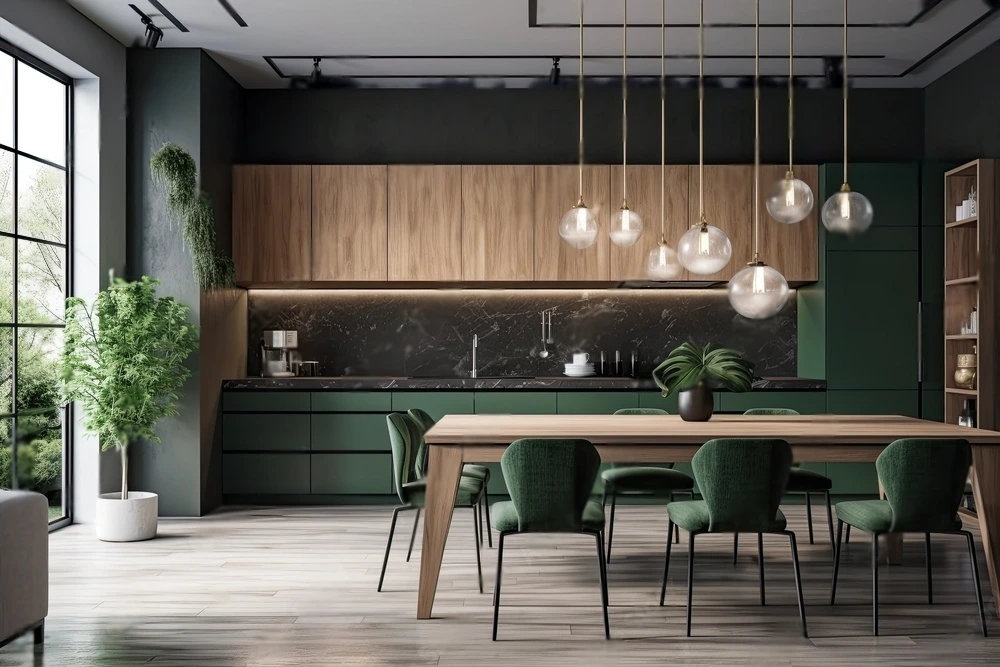
Regular maintenance is essential to ensure the longevity and efficiency of your green kitchen. Using eco-friendly cleaning products and adopting sustainable practices for appliance and material upkeep can keep your kitchen in top condition while staying true to its eco-friendly ethos.
Advanced Green Technologies in Kitchen Design

Smart Home Integrations
Incorporating smart home technology into your kitchen can significantly enhance its energy efficiency. Smart thermostats, automated lighting systems, and energy-monitoring devices help in reducing energy consumption and managing resources more effectively.
Renewable Energy Sources
Consider integrating renewable energy sources like solar panels to power your kitchen appliances. This not only reduces reliance on non-renewable energy but also cuts down on electricity bills in the long run.
Maintenance and Upkeep
Eco-Friendly Cleaning Solutions
Maintaining a green kitchen involves using eco-friendly cleaning products. These products, free from harsh chemicals, are better for the environment and safer for your family.
Regular Maintenance Tips
Regular maintenance ensures the longevity and efficiency of your kitchen. This includes servicing appliances, checking for leaks, and ensuring that all systems are functioning optimally.
Frequently Asked Questions
Eco-friendly cabinetry options include bamboo, reclaimed wood, and sustainably sourced timber. These materials are not only environmentally friendly but also durable and stylish.
To make your kitchen more energy-efficient, opt for Energy Star-rated appliances, LED lighting, and consider smart home integrations for better energy management.
Installing low-flow faucets and aerators can significantly reduce water usage. Additionally, using dishwashers with water-saving features and fixing leaks promptly are effective water conservation methods.
Tables Packed with Value
Energy Star Appliances: Savings and Benefits
| Appliance Type | Energy Savings | Environmental Impact |
| Refrigerators | Up to 40% | Reduced carbon footprint |
| Dishwashers | Up to 30% | Less water usage |
| Ovens | Up to 20% | Lower energy bills |
Water-Saving Faucets: A Comparison
| Faucet Type | Water Flow | Savings |
| Standard | 2.2 gpm | None |
| Low-Flow | 1.5 gpm | Up to 30% |
Related Posts

Future Kitchen Technologies: Revolutionizing Home Cooking and Design
The kitchen, often considered the heart…


Tech-Advanced Kitchen Design: The Future of Culinary Spaces
The kitchen, traditionally the heart of…