

Minimalism in kitchen design is not just a style; it’s a way of living that emphasizes simplicity, functionality, and beauty. A minimalist kitchen is streamlined, clutter-free, and focuses on the essentials, making it a perfect blend of form and function. This article delves into the world of minimalist kitchen fixtures, offering insights into how to achieve a minimalist look without sacrificing practicality or style.
Key Takeaways:
- Minimalist kitchens focus on clean lines, clutter-free surfaces, and simplicity.
- They can be fully equipped and optimized for meal prep, cooking, and gathering.
- Natural light, natural materials, and a neutral color palette are essential elements.
- Storage solutions are key to maintaining a minimalist look.
Understanding Minimalist Kitchen Design
The Essence of Minimalism
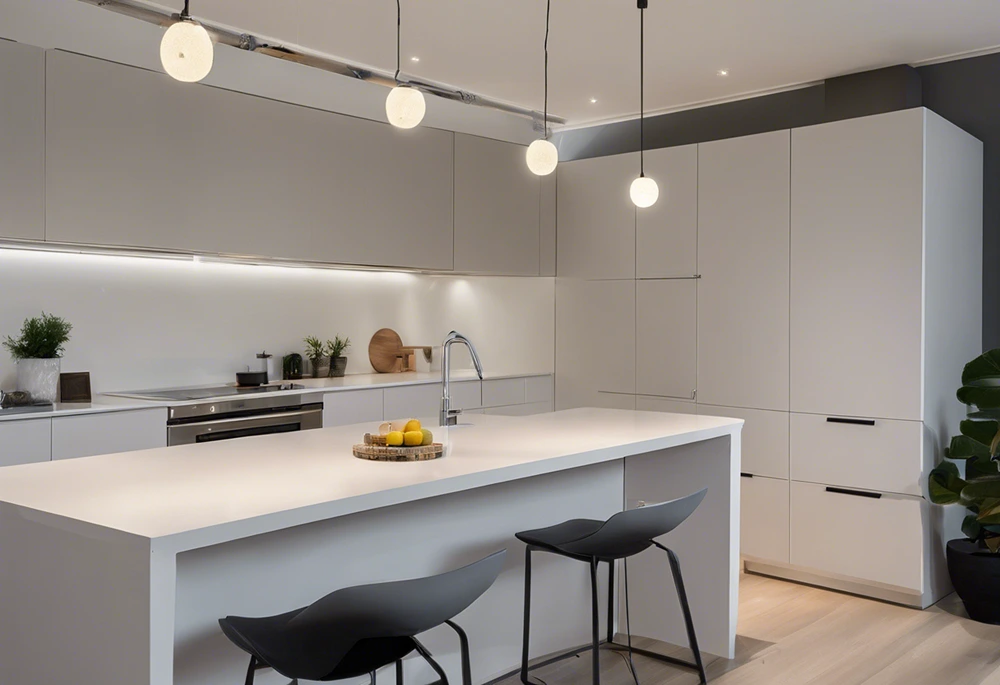
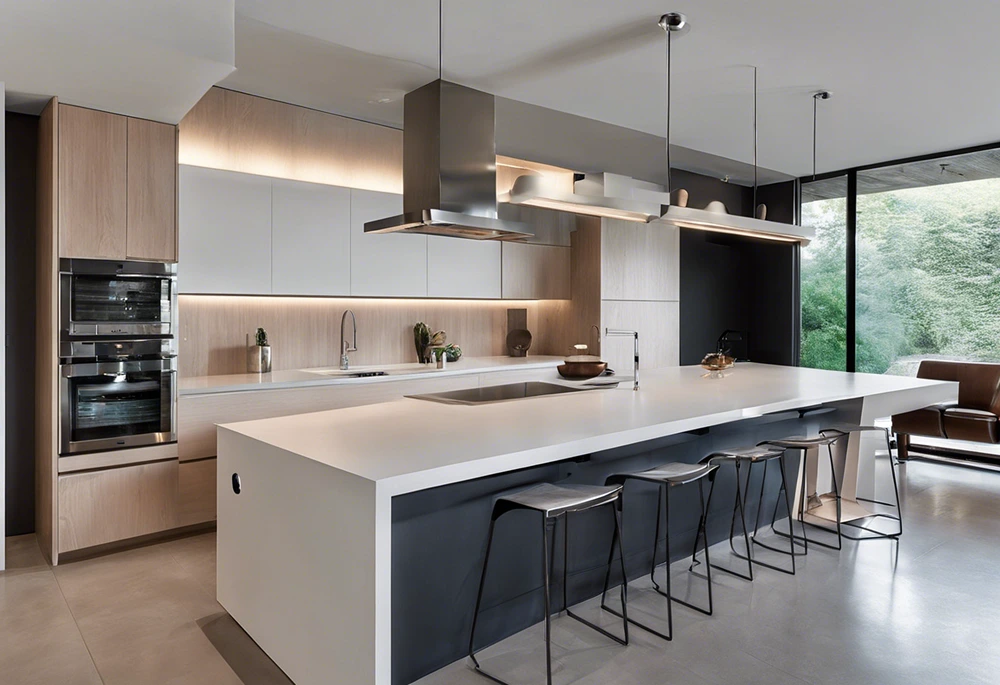
Minimalist kitchen design is all about reducing the space to its necessary elements. This design philosophy emphasizes clean lines, uncluttered spaces, and a neutral color palette. It’s not about having less; it’s about having only what is necessary, ensuring each item has a purpose and a place.
Key Elements of Minimalist Design
- Simplicity: The design should be straightforward, without unnecessary decorations.
- Functionality: Every element must serve a purpose, contributing to the overall functionality of the space.
- Clean Lines: Cabinets, countertops, and fixtures should have clean, straight lines, avoiding ornate details.
Types of Minimalist Kitchen Fixtures
Sinks and Taps
Minimalist sinks are typically under-mounted and sleek, often made of materials like stainless steel or composite granite. Taps are functional yet stylish, with simple designs and often a matte or brushed finish.
Lighting
Lighting in a minimalist kitchen is more than just functional; it’s a design statement. Pendant lights with simple geometric shapes or recessed lighting are popular choices.
Storage Solutions
Storage is crucial in a minimalist kitchen. Cabinets are often handleless, and drawers are equipped with modern, efficient organizers. Open shelving, when used, is minimal and carefully curated.
Designing a Minimalist Kitchen: Layout and Planning
Effective Layout Strategies
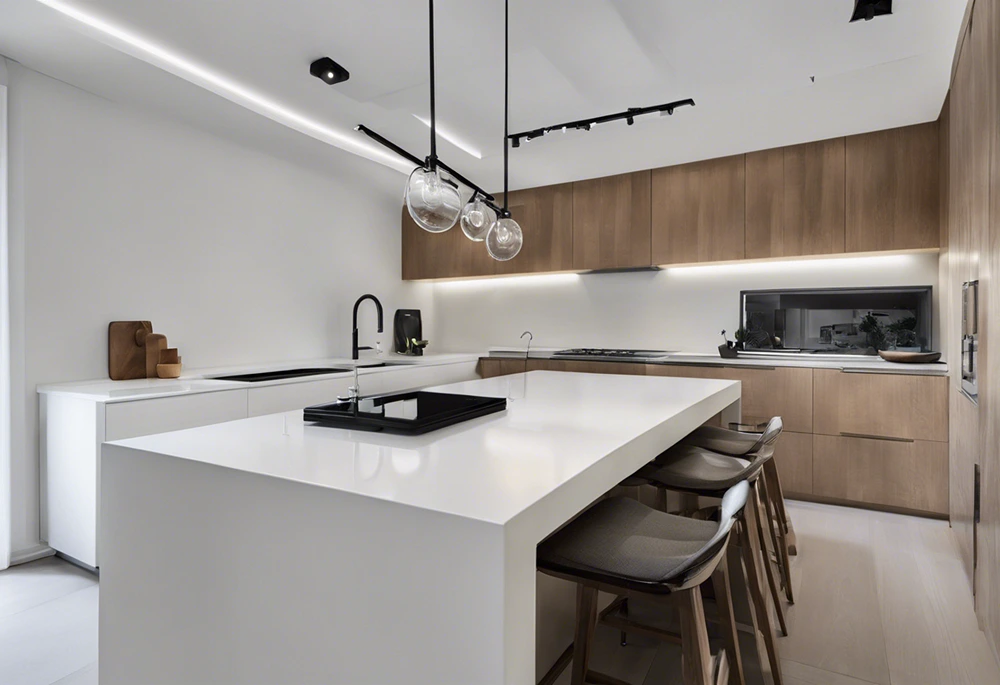
The layout of a minimalist kitchen should promote ease of movement and functionality. The popular ‘triangle’ layout, connecting the sink, stove, and refrigerator, is often used.
Balance Between Design and Functionality
While aesthetics are important, functionality should not be compromised. The layout should facilitate easy access to appliances and storage while maintaining a clean look.
Incorporating Minimalist Principles
Every aspect of the kitchen, from the floor plan to the choice of appliances, should reflect minimalist principles. This means opting for built-in appliances, integrated handles, and efficient use of space.
Minimalist Kitchen Storage Solutions
Innovative Storage Ideas
- Pull-out cabinets for spices and condiments.
- Built-in organizers for cutlery and utensils.
- Hidden panels for small appliances.
Maximizing Space
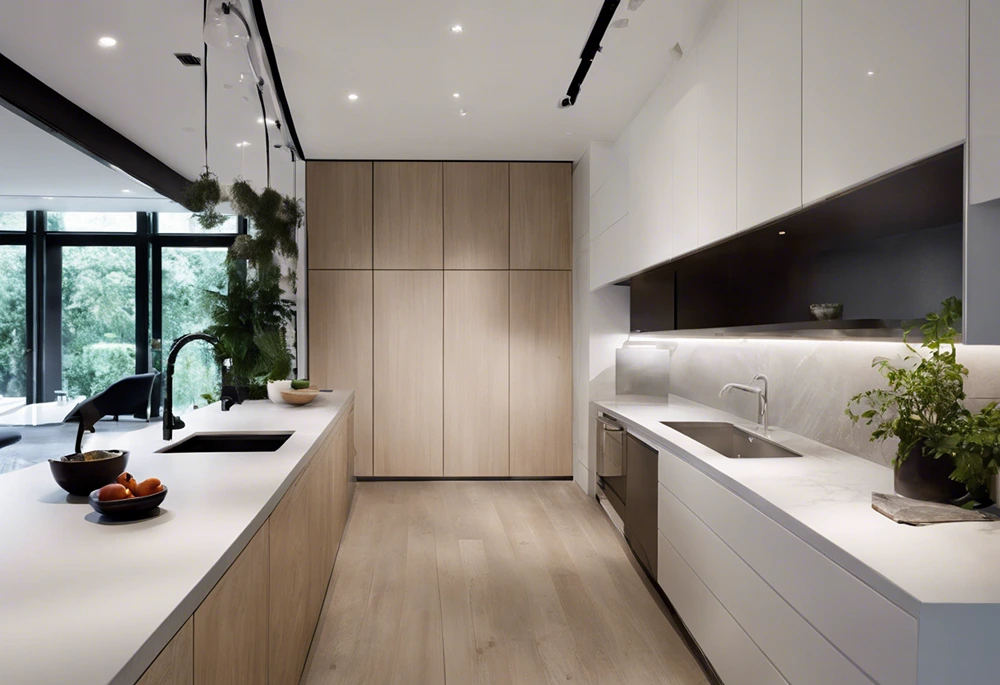
Utilizing every inch of space is key in a minimalist kitchen. This can include corner drawers, ceiling-high cabinets, and under-sink storage.
Examples of Minimalist Storage Fixtures
- Floating shelves: For a clean, open display of select items.
- Integrated storage: Such as built-in cutting boards or hidden charging stations.
Advanced Design Concepts for Minimalist Kitchens
Minimaluxe Kitchens: A Soft Approach to Minimalism
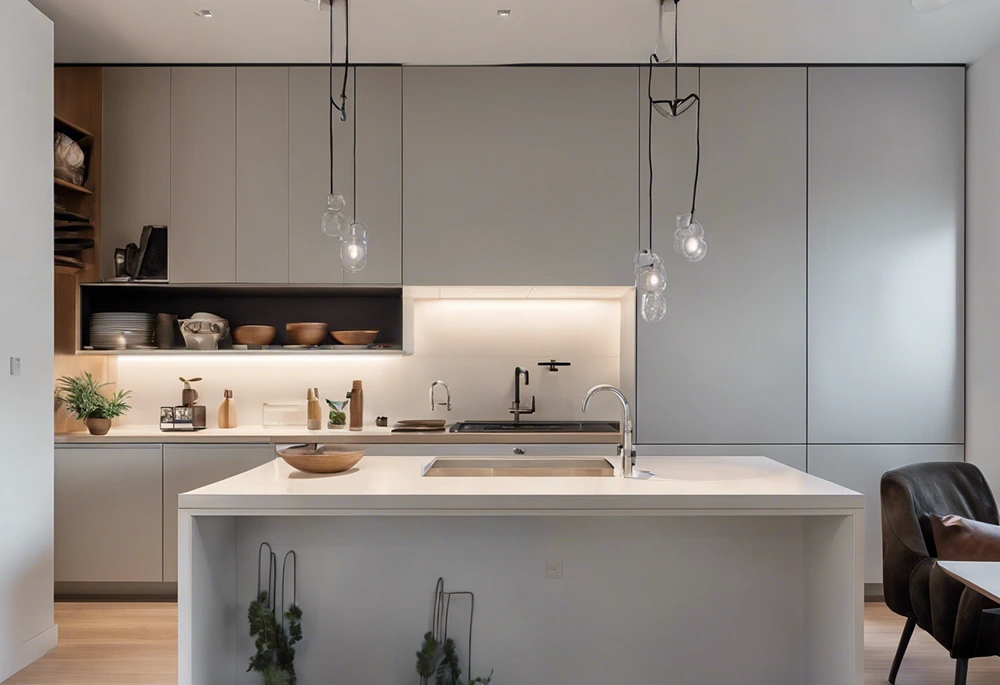
Minimaluxe kitchens blend minimalism’s clean lines and simplicity with luxurious elements, creating a warm, inviting space. This style often incorporates soft textures, muted color palettes, and premium materials.
Integrating Technology in Minimalist Design
Modern minimalist kitchens often feature integrated technology, such as smart appliances and hidden charging stations, enhancing functionality without disrupting the minimalist aesthetic.
Sustainable and Eco-Friendly Fixtures
Eco-friendly design is increasingly important in minimalist kitchens. This includes using sustainable materials, energy-efficient appliances, and fixtures that reduce water waste.
Maintaining a Minimalist Kitchen
Tips for a Clutter-Free Kitchen
- Regular Cleaning: Daily cleaning routines help maintain the minimalist look.
- Organized Storage: Utilize smart storage solutions to keep countertops clear.
- Mindful Purchasing: Avoid accumulating unnecessary items and gadgets.
Routine Maintenance of Minimalist Fixtures
Regular maintenance of fixtures, such as cleaning tap heads and decluttering drawers, is essential to keep the kitchen functional and aesthetically pleasing.
Balancing Minimalism with a Busy Lifestyle
- Efficient Layout: Design your kitchen to suit your lifestyle, ensuring easy access to frequently used items.
- Multi-functional Spaces: Incorporate areas that can serve multiple purposes, like dining and prep areas.
Frequently Asked Questions
When selecting fixtures, consider both form and function. Opt for simple designs that complement the overall minimalist theme and ensure they are practical for your daily needs.
Absolutely! Minimalist kitchens can be designed to be both stylish and functional for families. Incorporate durable materials and ensure there’s adequate storage to keep the space organized.
Materials like stainless steel, natural wood, and stone are popular in minimalist kitchens. They offer durability and a timeless look that aligns with the minimalist ethos.
Related Posts

Future Kitchen Technologies: Revolutionizing Home Cooking and Design
The kitchen, often considered the heart…


Tech-Advanced Kitchen Design: The Future of Culinary Spaces
The kitchen, traditionally the heart of…