

Renovating your kitchen is not just about aesthetics; it’s an opportunity to incorporate sustainability and eco-friendliness into the heart of your home. With the growing emphasis on environmental responsibility, a sustainable kitchen renovation can significantly reduce your carbon footprint while creating a stylish and functional space.
Key Takeaways
- Sustainability in kitchen design is about using eco-friendly materials and energy-efficient appliances.
- Planning is crucial for a successful sustainable renovation.
- Energy efficiency can be achieved through smart appliance choices and design practices.
Current Trends in Sustainable Kitchen Design
The world of kitchen design is constantly evolving, with sustainability at the forefront of recent trends. These trends not only add a modern touch to your kitchen but also contribute significantly to environmental conservation.

Eco-Friendly Materials
Incorporating sustainable materials is a key aspect of eco-friendly kitchen design. Options like bamboo, recycled glass, and reclaimed wood not only add unique aesthetics but also minimize environmental impact.
Energy-Efficient Appliances
Choosing appliances with the EnergyStar label ensures high efficiency and lower energy consumption. According to Energy.gov, these appliances can significantly reduce your energy bills and carbon footprint.
Innovative Storage Solutions
Modern kitchens are embracing smart storage solutions that maximize space and reduce the need for additional resources. This includes pull-out recycling bins and efficiently designed cabinetry.
Planning Your Sustainable Kitchen Renovation
A well-planned renovation is key to achieving a sustainable kitchen. Here are some steps to guide you through the process:
Assess Your Needs
Understand your kitchen’s layout and how you use the space. This will help in making informed decisions about the design and appliances.
Set a Budget
Determine a budget that includes the cost of sustainable materials and appliances. Remember, investing in quality eco-friendly products can save money in the long run.
Hire a Professional
Consider hiring a professional with experience in sustainable design. They can provide valuable insights and ensure that your renovation meets environmental standards.
Materials and Products for a Sustainable Kitchen
Choosing the right materials and products is crucial for a sustainable kitchen renovation.

Countertops
Options like recycled glass, bamboo, and reclaimed wood are not only sustainable but also durable and stylish.
Cabinets
Look for cabinetry made from sustainable woods or recycled materials. Ensure that they are free from harmful chemicals like formaldehyde.
Flooring
Bamboo and cork are excellent sustainable flooring options. They are renewable, durable, and add warmth to your kitchen.
Appliances
Invest in energy-efficient appliances. Induction cooktops, for example, are more efficient than traditional gas or electric stoves. Energy-saving tips for existing appliances include:
- Using a covered kettle or pan to boil water
- Matching the size of the pan to the heating element
- Regularly defrosting manual-defrost freezers and refrigerators
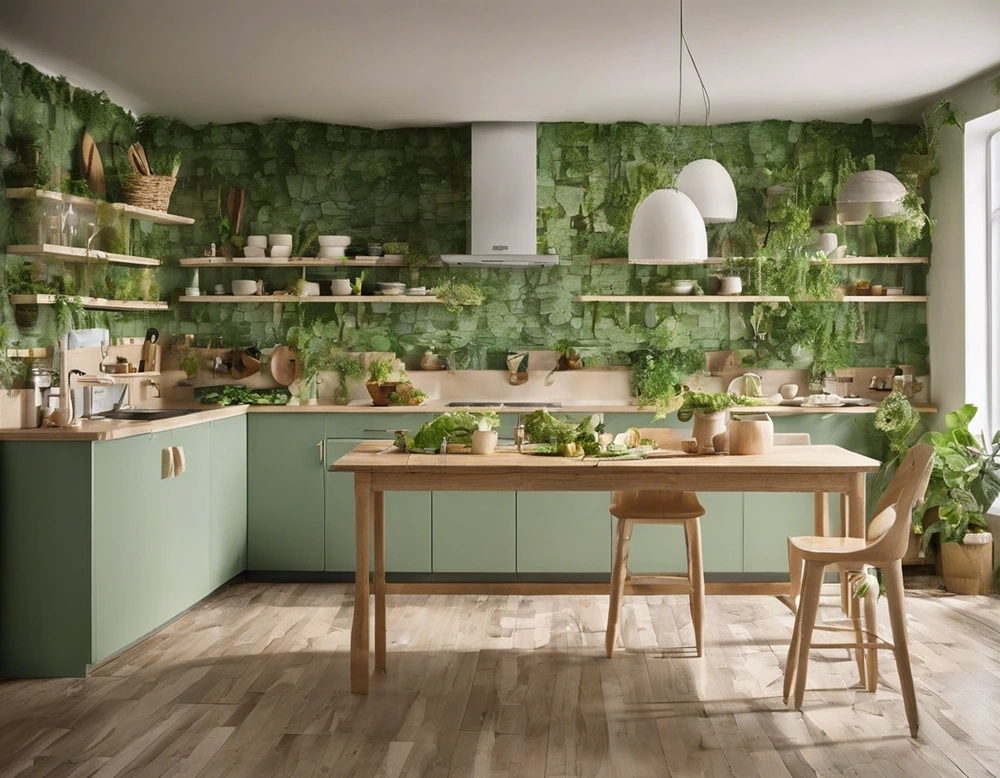
Energy Efficiency in Kitchen Design
Energy efficiency is a cornerstone of sustainable kitchen design. Here are some ways to achieve it:
Smart Appliance Selection
Choose appliances that have a high energy efficiency rating. This not only reduces energy consumption but also cuts down on utility bills.
Efficient Lighting
Opt for LED lighting, which is much more energy-efficient than traditional lighting options. Consider task lighting to focus light where it’s needed most, reducing the need for general overhead lighting.
Insulation and Ventilation
Proper insulation and ventilation can significantly reduce energy consumption. Ensure that your kitchen is well-insulated to maintain temperature and that ventilation systems are efficient.
Sustainable Lighting and Water Use
Efficient lighting and responsible water use are essential components of a sustainable kitchen.
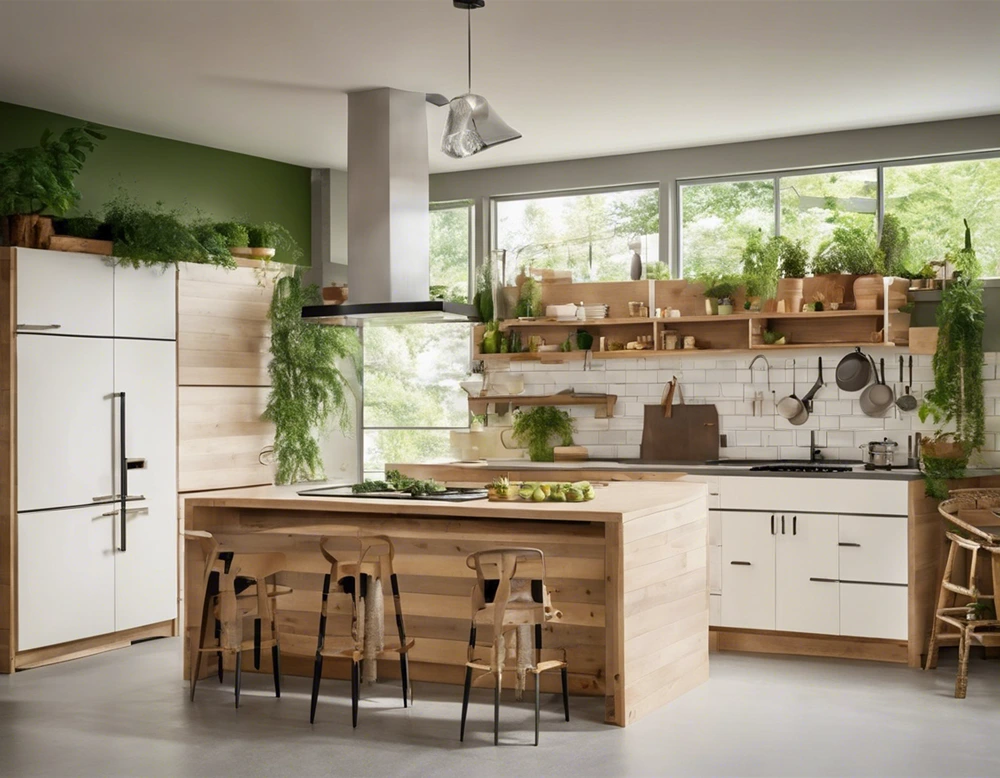
Lighting Efficiency
- Choose LED or CFL bulbs for your kitchen lighting as they consume significantly less energy than traditional incandescent bulbs.
- Use motion sensors or timers to automatically turn off lights when the kitchen is not in use.
- Consider installing skylights or large windows to maximize natural daylight and reduce the need for artificial lighting.
Water-Saving Fixtures
- Install low-flow faucets and aerators to reduce water consumption while maintaining adequate water pressure.
- Opt for a dual-function sink faucet with a spray and stream mode to conserve water when needed.
- Fix any leaks promptly, as even minor drips can waste a substantial amount of water over time.
Table 1: Energy-Efficient Lighting Options
| Lighting Type | Energy Efficiency | Lifespan (Hours) |
| LED Bulbs | Very High | 25,000 – 50,000 |
| CFL Bulbs | High | 8,000 – 15,000 |
| Incandescent | Low | 1,000 – 2,000 |
Table 2: Water-Saving Fixtures Comparison
| Fixture Type | Gallons Per Minute (GPM) | Water-Efficiency Rating |
| Standard Faucet | 2.2 GPM | Low |
| Low-Flow Faucet | 1.5 GPM | High |
| Dual-Function Faucet | Variable (1.5-2.2 GPM) | High |
Waste Reduction and Recycling
Minimizing waste and promoting recycling in your kitchen are essential steps toward sustainability.
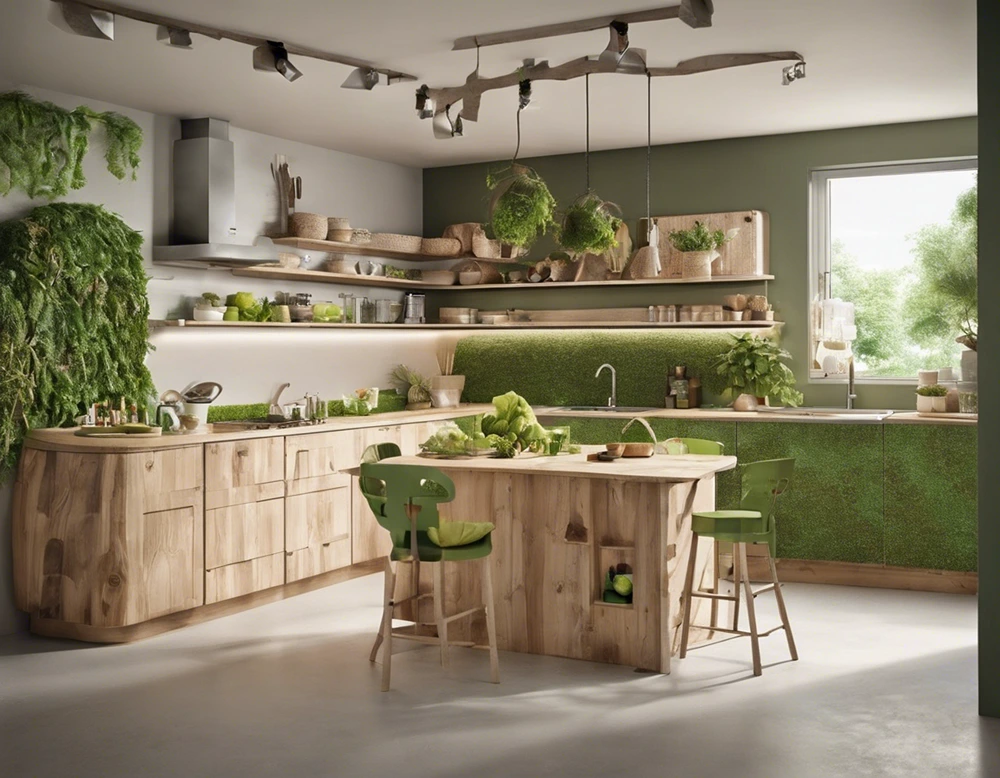
Recycling Station
- Create a dedicated recycling station in your kitchen with separate bins for paper, plastic, glass, and metal.
- Educate your household members about proper recycling practices to ensure items are disposed of correctly.
Composting
- Consider setting up a composting system for organic kitchen waste, such as food scraps and peels.
- Compost can be used to enrich your garden soil, reducing the need for chemical fertilizers.
Table 3: Common Kitchen Recyclables
| Material | Recyclability | Common Uses for Recycled Material |
| Glass | Highly Recyclable | New glass containers and insulation |
| Plastic | Varies by Type | Plastic bottles, containers, and synthetic fabrics |
| Aluminum | Highly Recyclable | Aluminum cans and aluminum foil |
| Paper | Highly Recyclable | New paper products and cardboard |
DIY Tips for Sustainable Kitchen Renovation
Embarking on DIY projects can be both cost-effective and sustainable.
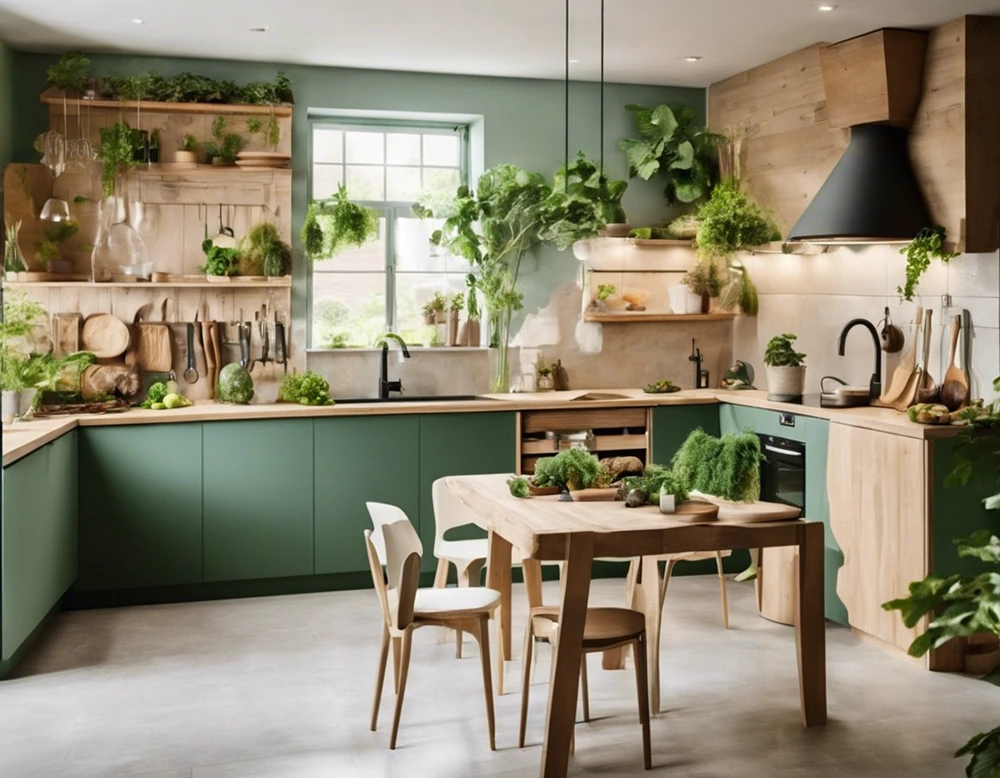
Upcycling Furniture
- Repurpose old furniture or cabinets to reduce the need for new materials.
- Sand and repaint old wooden furniture to give it a fresh, eco-friendly look.
Energy-Efficient Appliances
- Install programmable thermostats to regulate your kitchen’s temperature efficiently.
- Seal any gaps and cracks around windows and doors to prevent energy loss.
Table 4: DIY Projects for Sustainable Kitchen Renovation
| Project | Eco-Friendly Benefits | Estimated Cost |
| Upcycling Furniture | Reduces the demand for new materials | Low to Moderate |
| Programmable Thermostats | Optimizes energy usage | Moderate |
| Weatherproofing | Prevents energy loss | Low |
Frequently Asked Questions (FAQs)
Let’s address some common queries related to sustainable kitchen renovation:
Energy-efficient lighting reduces electricity consumption, lowers utility bills, and has a longer lifespan, reducing the need for frequent replacements.
Installing low-flow faucets and aerators, fixing leaks promptly, and using water-saving practices can significantly reduce water wastage.
In some regions, you may be eligible for tax credits or incentives for using energy-efficient appliances and sustainable materials. Check with your local authorities for specific programs.
Related Posts

Future Kitchen Technologies: Revolutionizing Home Cooking and Design
The kitchen, often considered the heart…


Tech-Advanced Kitchen Design: The Future of Culinary Spaces
The kitchen, traditionally the heart of…